Kevin Weber
Fashion Design — Contemporary Fashion · Pforzheim, DE
Fashion designer turning craft, research and narrative into sculptural contemporary form
Trained in the craft first — state-recognized fashion designer, Kehrer Design Academy Stuttgart — now completing my Fashion B.A. at Pforzheim University of Design, currently on exchange at Hongik University, Seoul. My practice starts from what already exists: garments and materials taken apart, their value redefined. Each project is grounded in research and told as a story — genderless fashion that balances conceptual depth with wearability.
Pforzheim, DE · currently Seoul, KR — until 12/2026
Open for internships — from 01/2027
Studio or atelier internship in menswear or womenswear ready-to-wear. Mandatory internship semester: 6 months, up to 8 possible.
Skills
Pattern making · Flat pattern drafting · Pattern cutting · Draping · Toiles · Fittings · Garment construction · Tailoring · Deconstruction · Industrial & hand sewing · Finishing · Prototyping
Fashion design · Technical drawing · Technical flats · Tech packs · Fashion illustration · Drawing · Mood boards · Research · Styling · Menswear · Womenswear · Ready-to-wear
Machine knitting · Weaving · Hand spinning · Natural dyeing · Material research · Biomaterials · Tanning · Upcycling · Circular design · 3D printing · Fine metalwork
Adobe Illustrator, Photoshop, InDesign, Lightroom (excellent) · CLO 3D, Assyst (intermediate) · Microsoft Office (intermediate) · Procreate (working knowledge)
German (native) · English (very good, B2/C1 — studying in English at Hongik University) · Russian (basic, A2) · Latin (Latinum)
Education
Tailoring and deconstruction, garment construction, research-led collection development. Textile Lab: colour, spinning, weaving; material research.
Machine knitting, weaving, fine metal, drawing.
Three years of vocational training: flat pattern drafting, pattern cutting, garment construction (tailored and soft garments), technical drawing and collection development.
Projects & Exhibitions
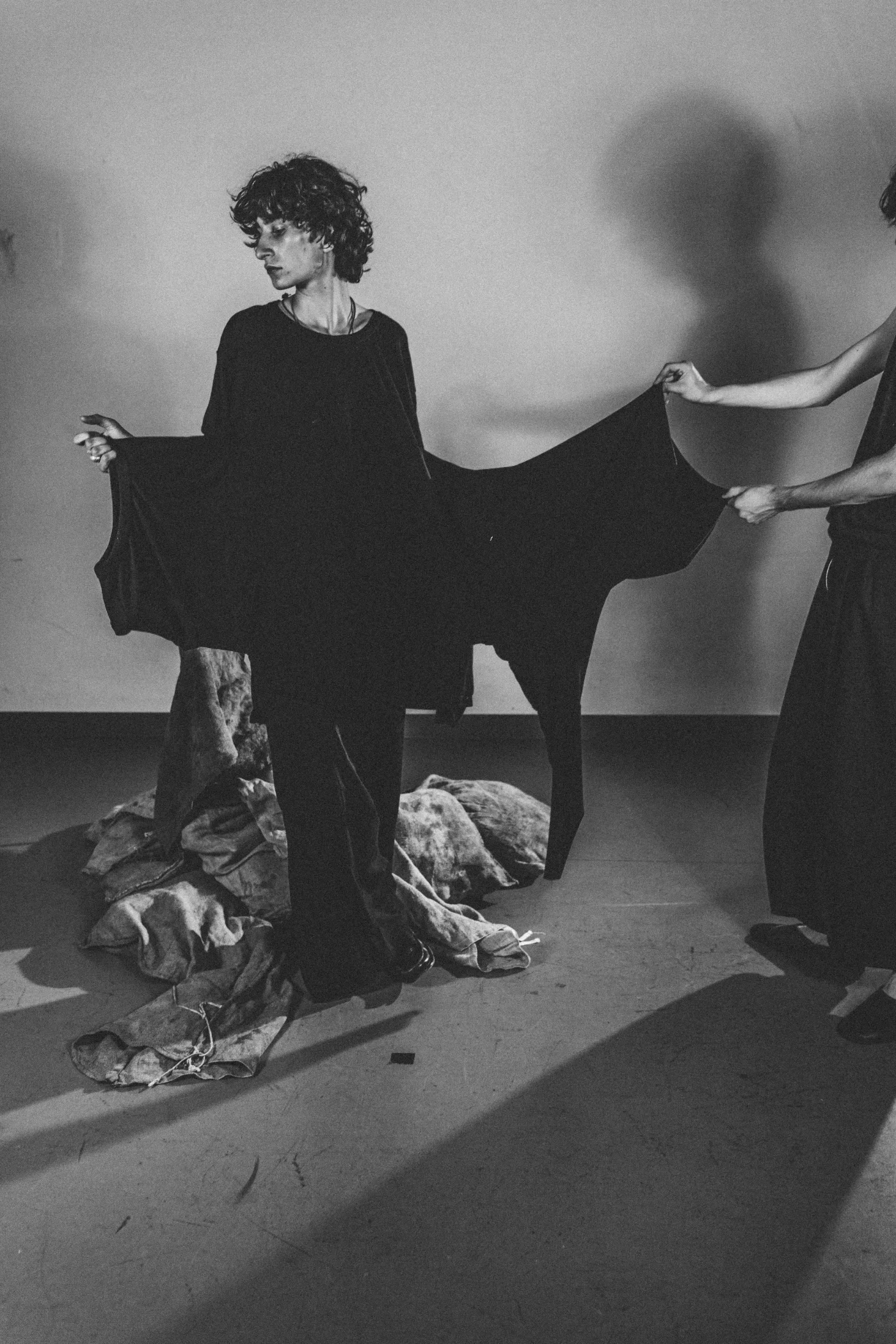
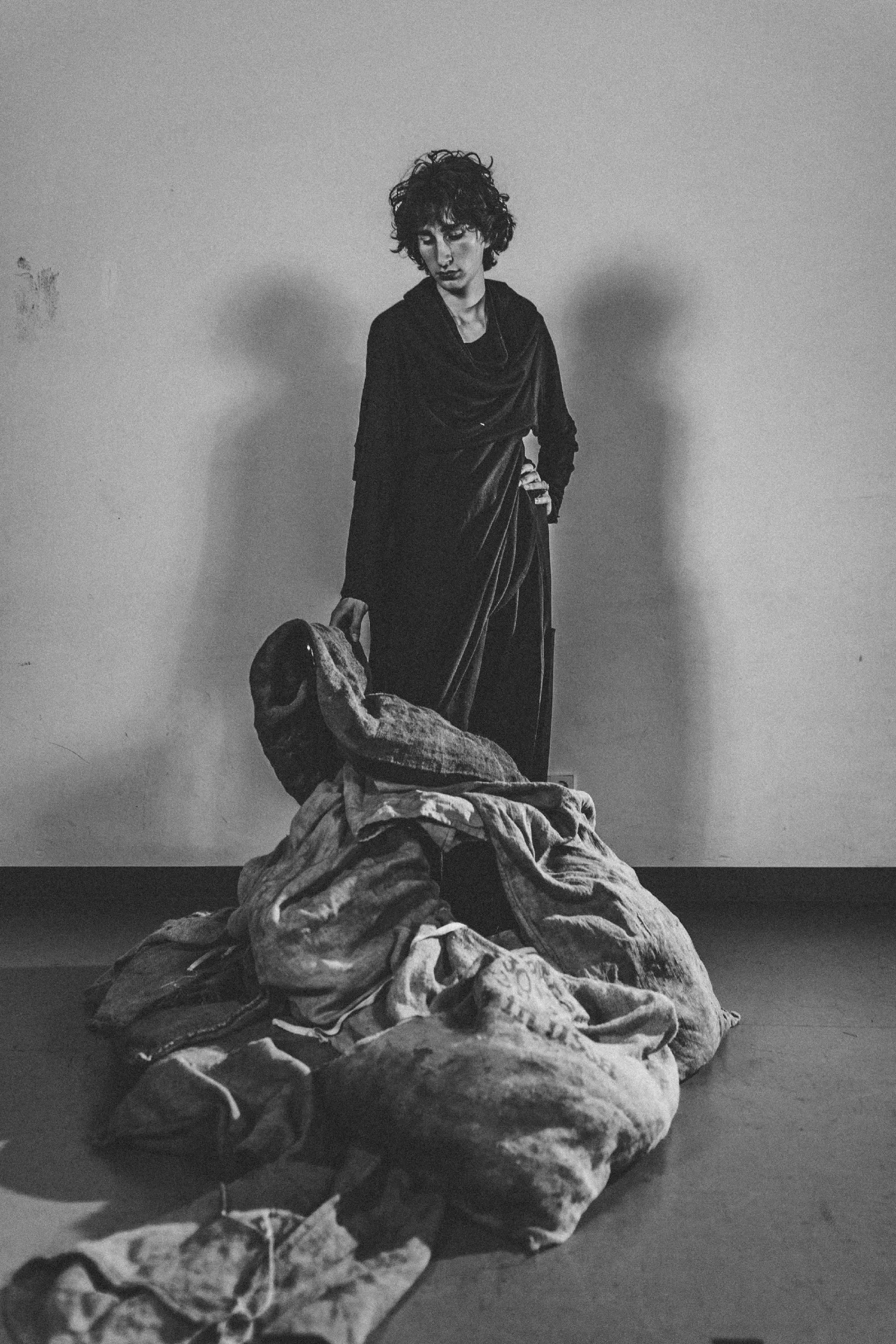
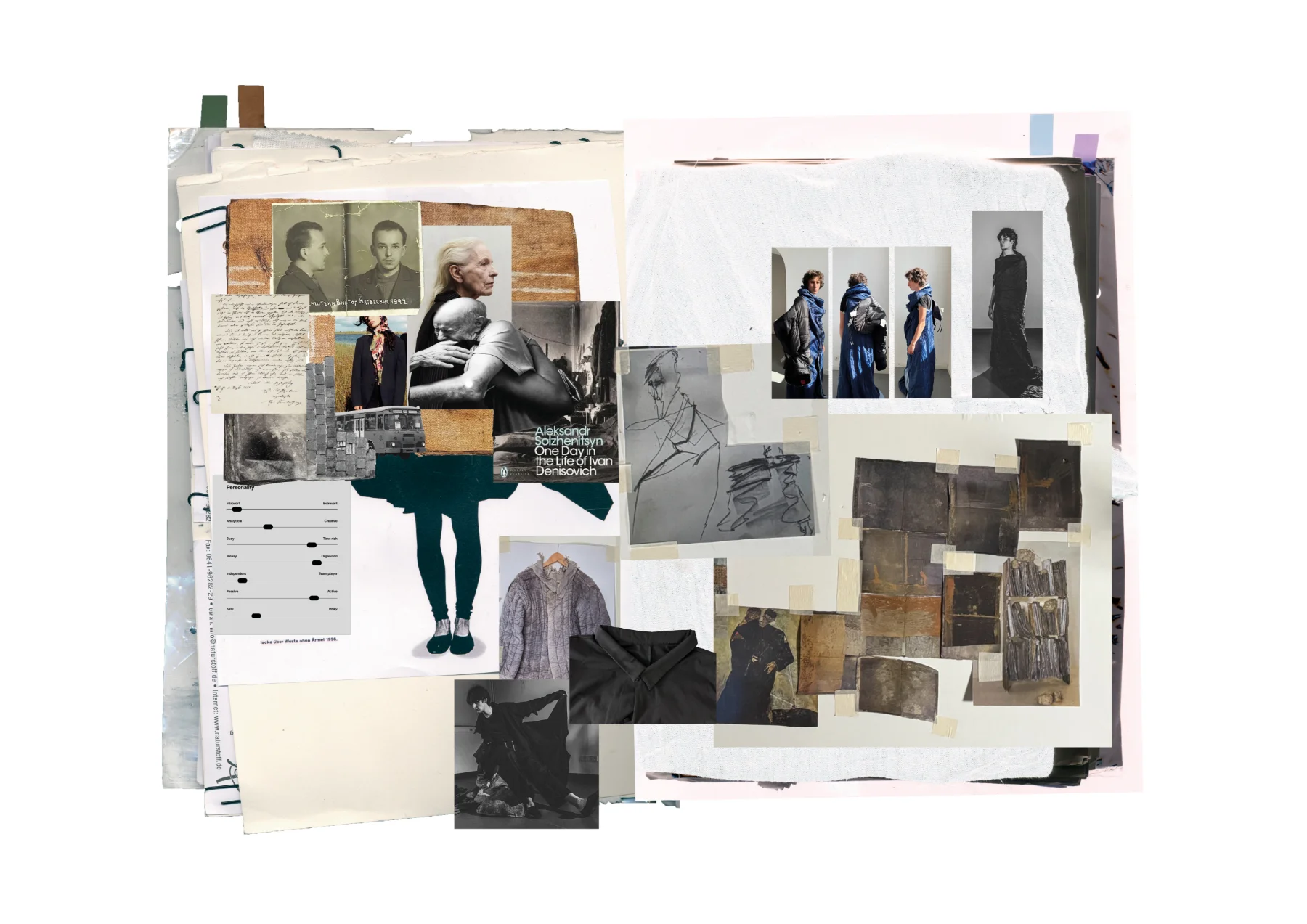
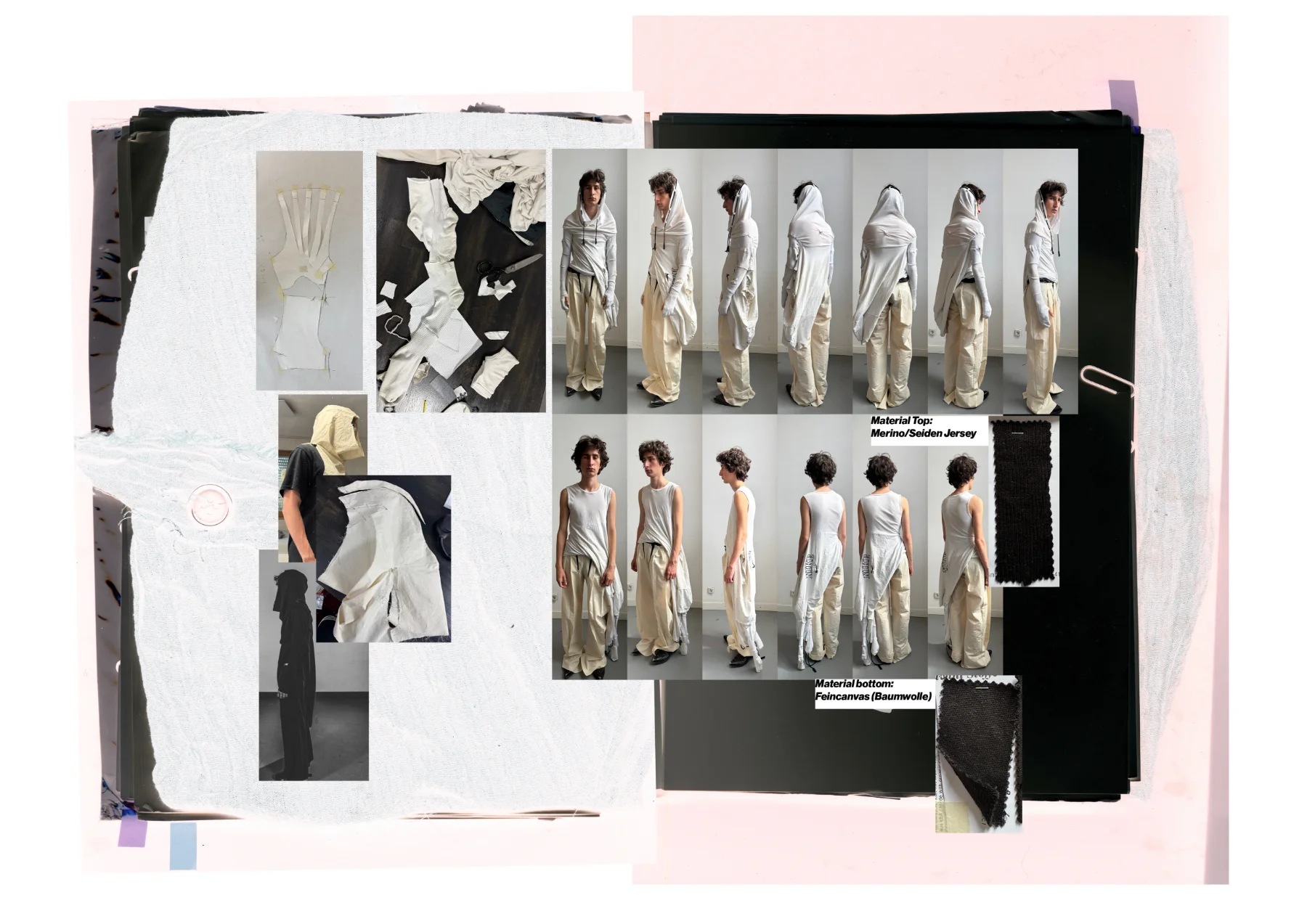
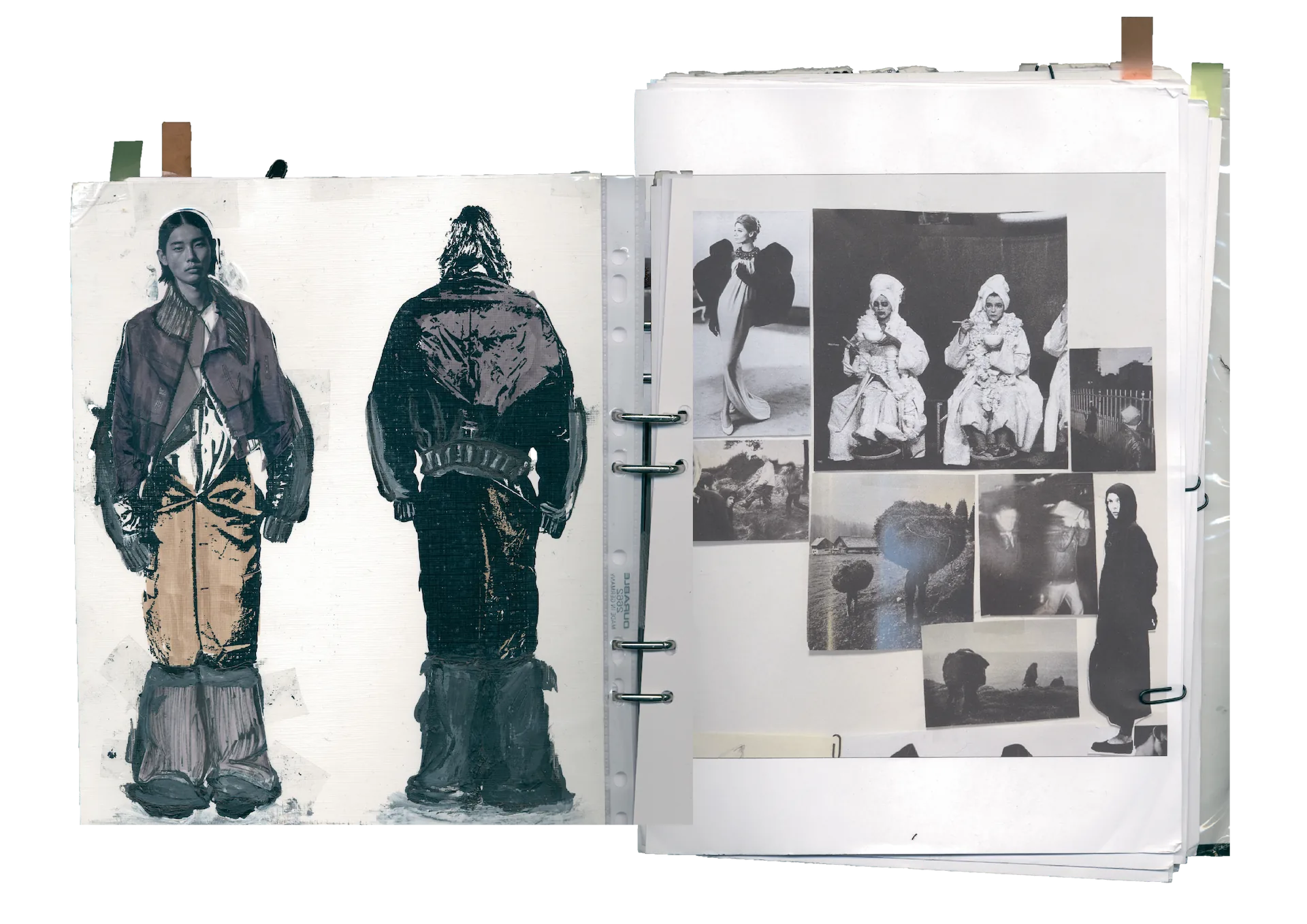
Functional menswear wardrobe for a former Gulag prisoner on the run; literary foundation: Solzhenitsyn, One Day in the Life of Ivan Denisovich. Sleeping bag/coat hybrid, merino/silk jersey layers, double-zip trousers — developed through toiles and fittings.
Led a small design team that made further pieces with the Mottainai principle, from sourcing to the installation; the pieces were exhibited and sold.
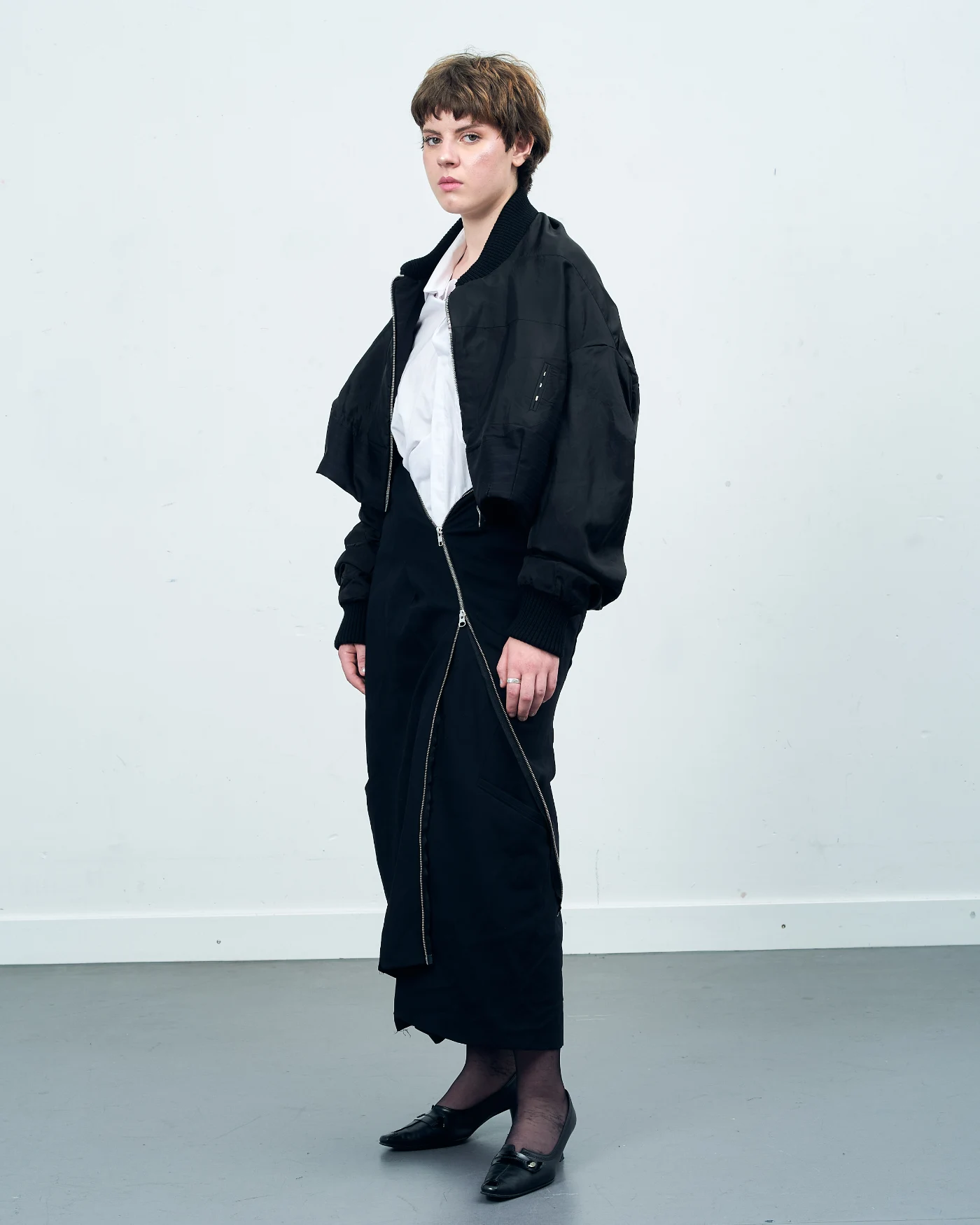
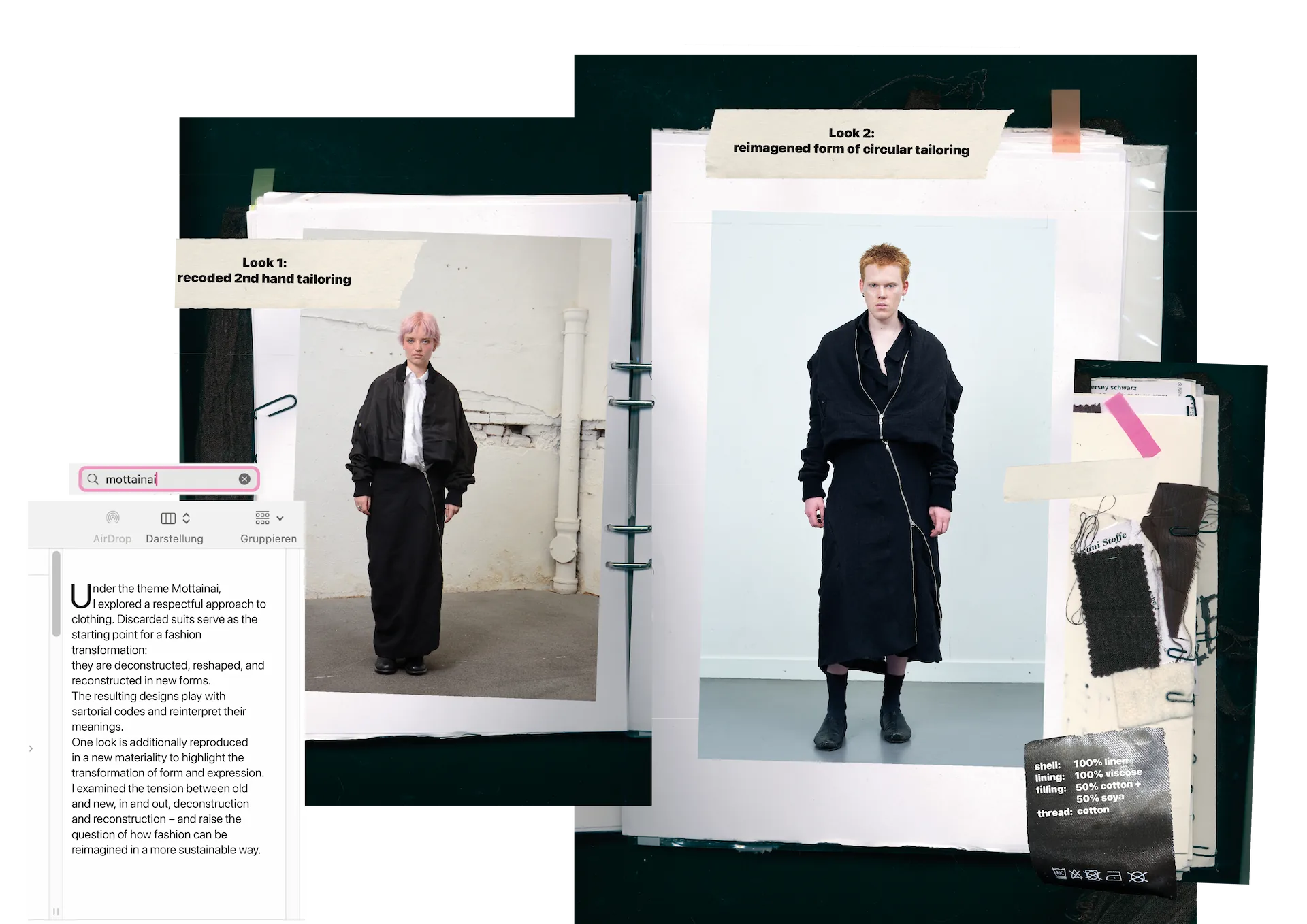
Developed a system that turns discarded suits into blousons and skirts by rotating the pattern; one look reproduced in linen with viscose lining and cotton/soya filling.
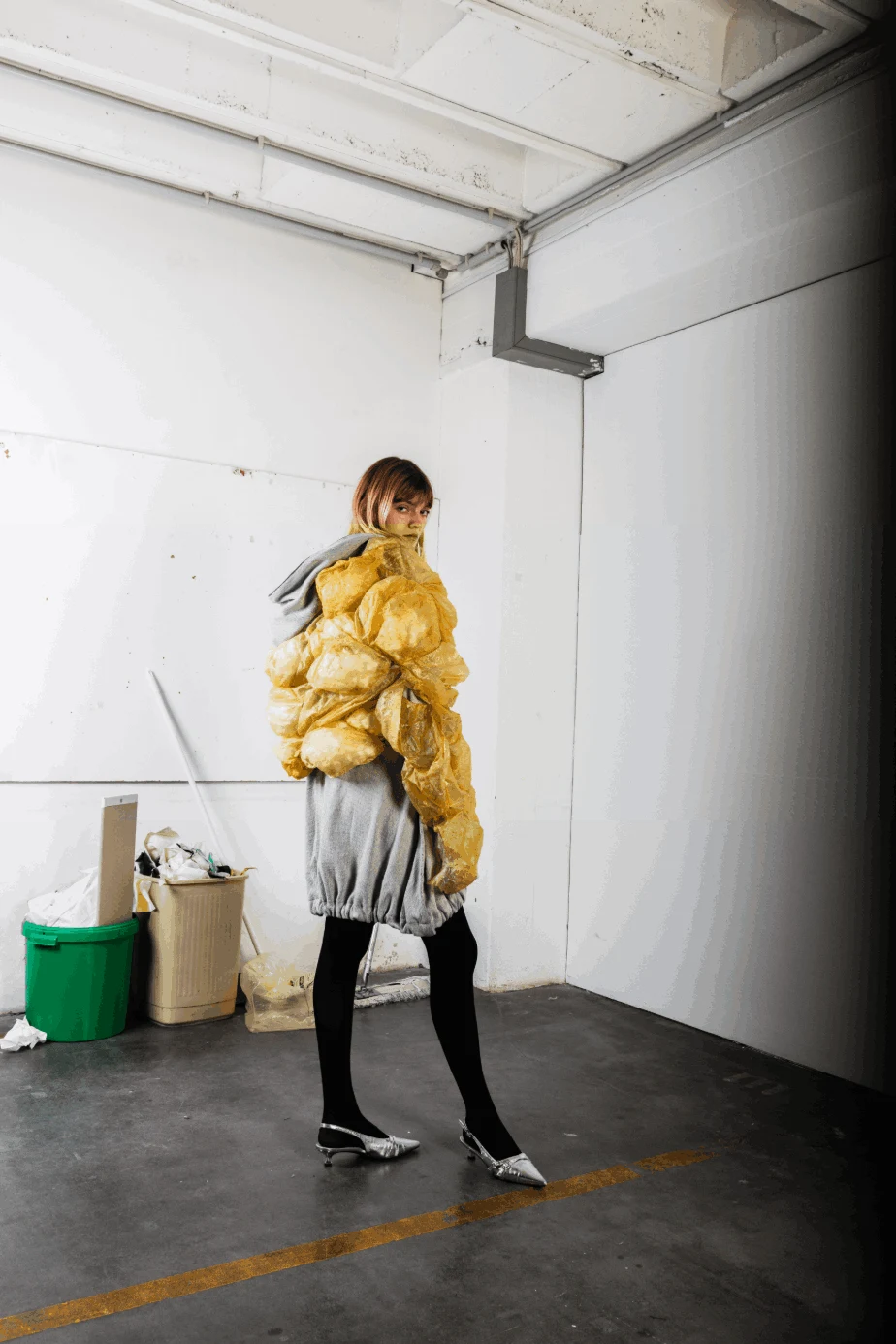
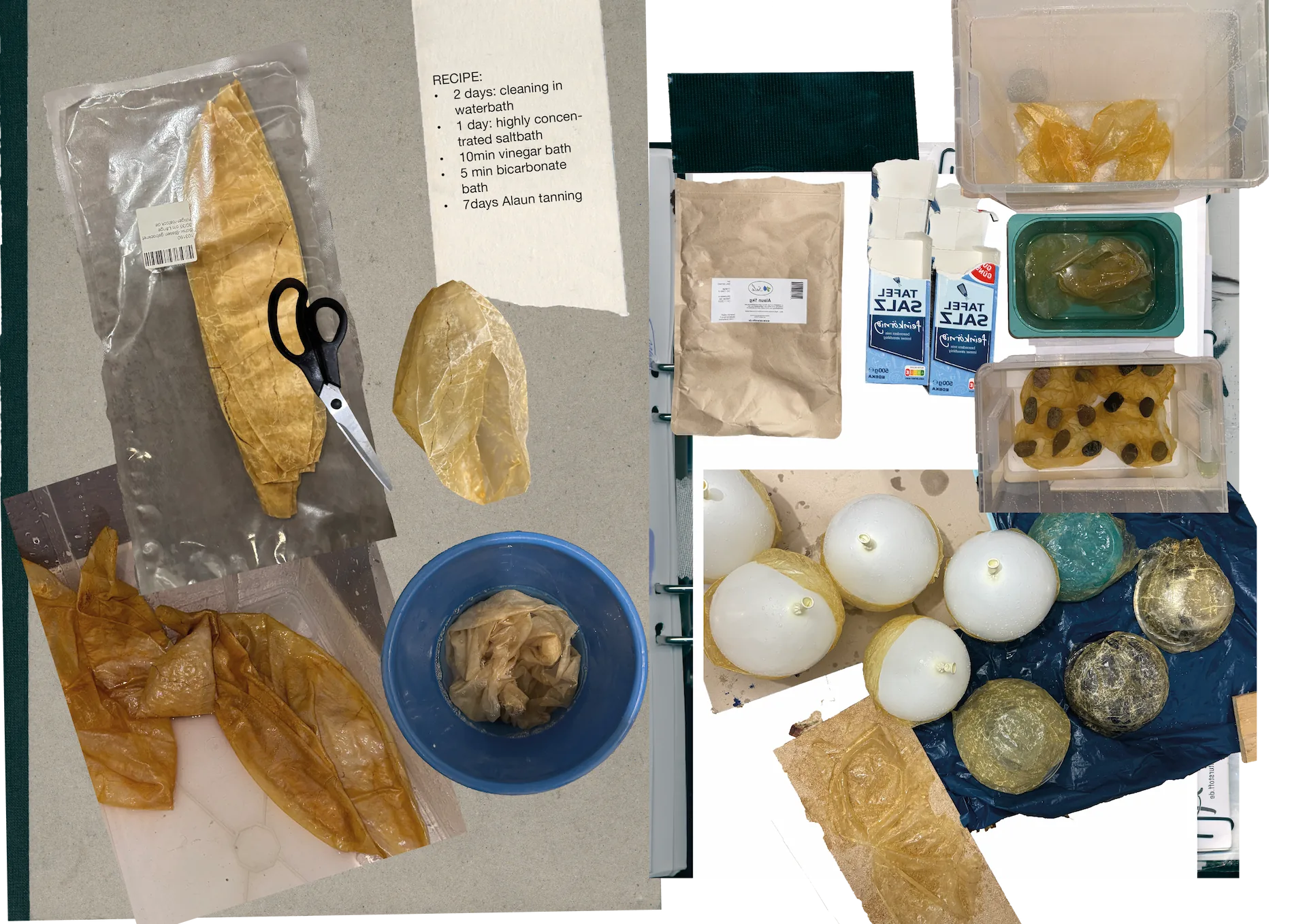
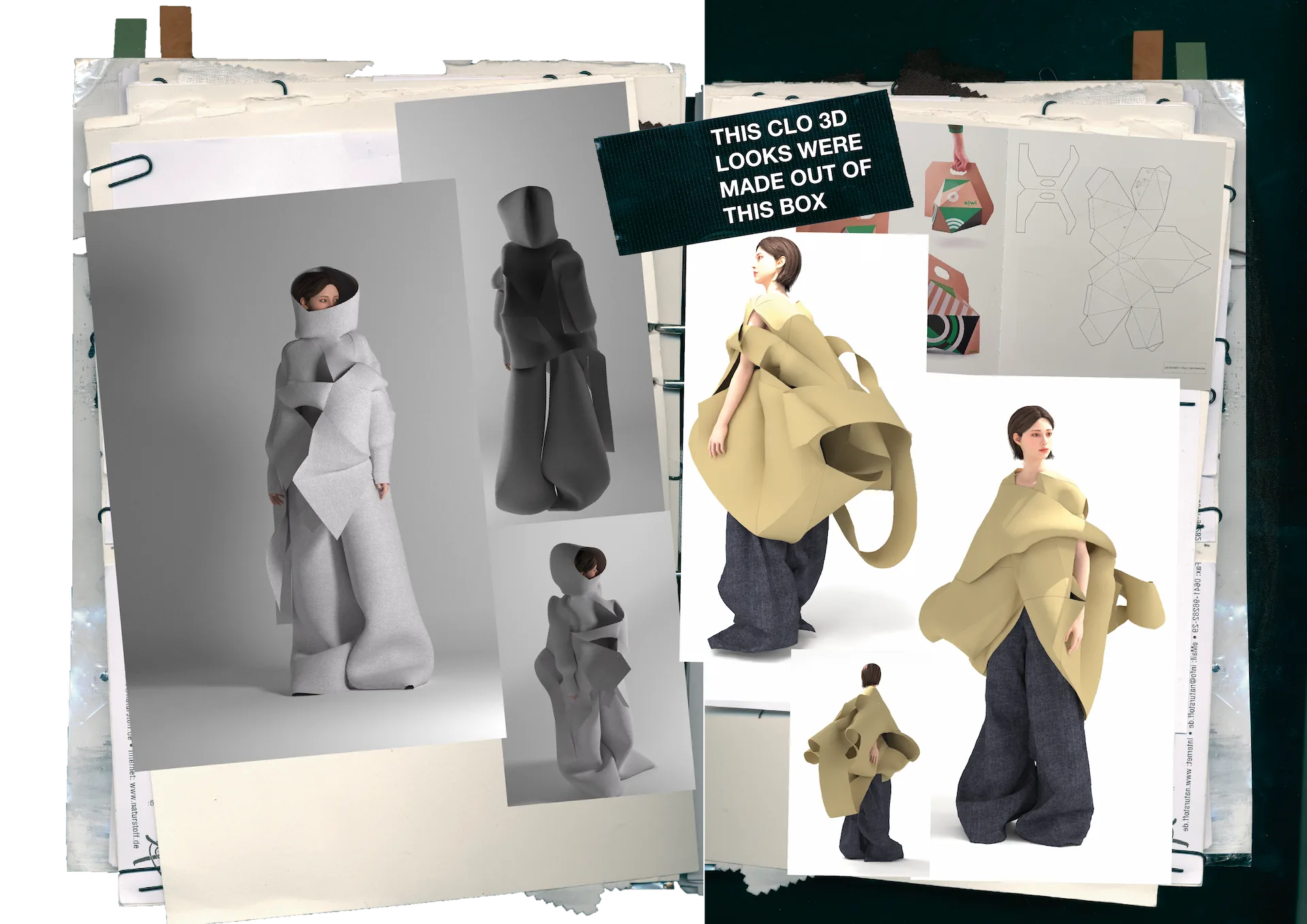
Alum-tanned pig bladder built into a puffer jacket; draping study into a shopping-bag silhouette; looks developed in CLO 3D.
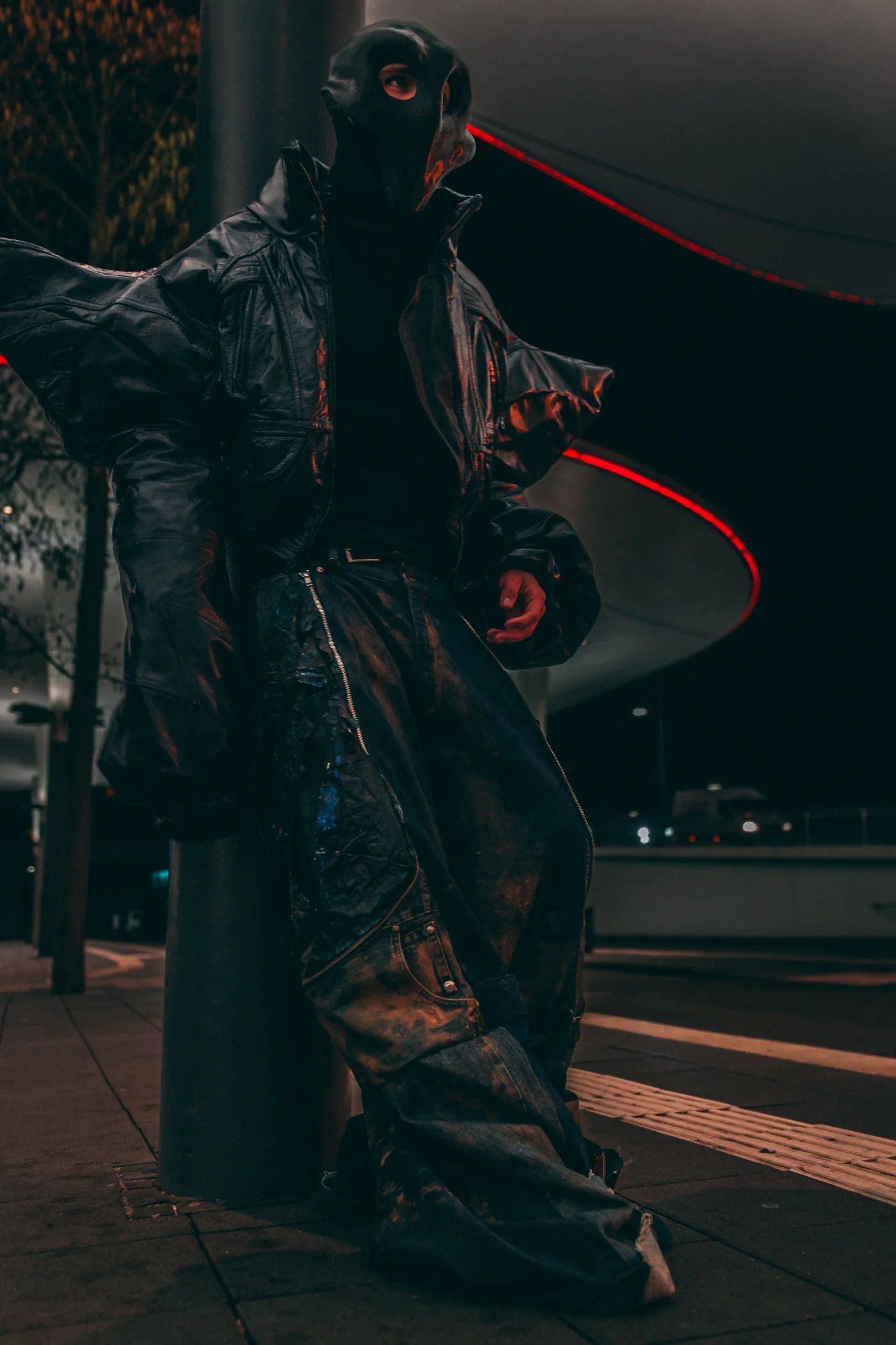
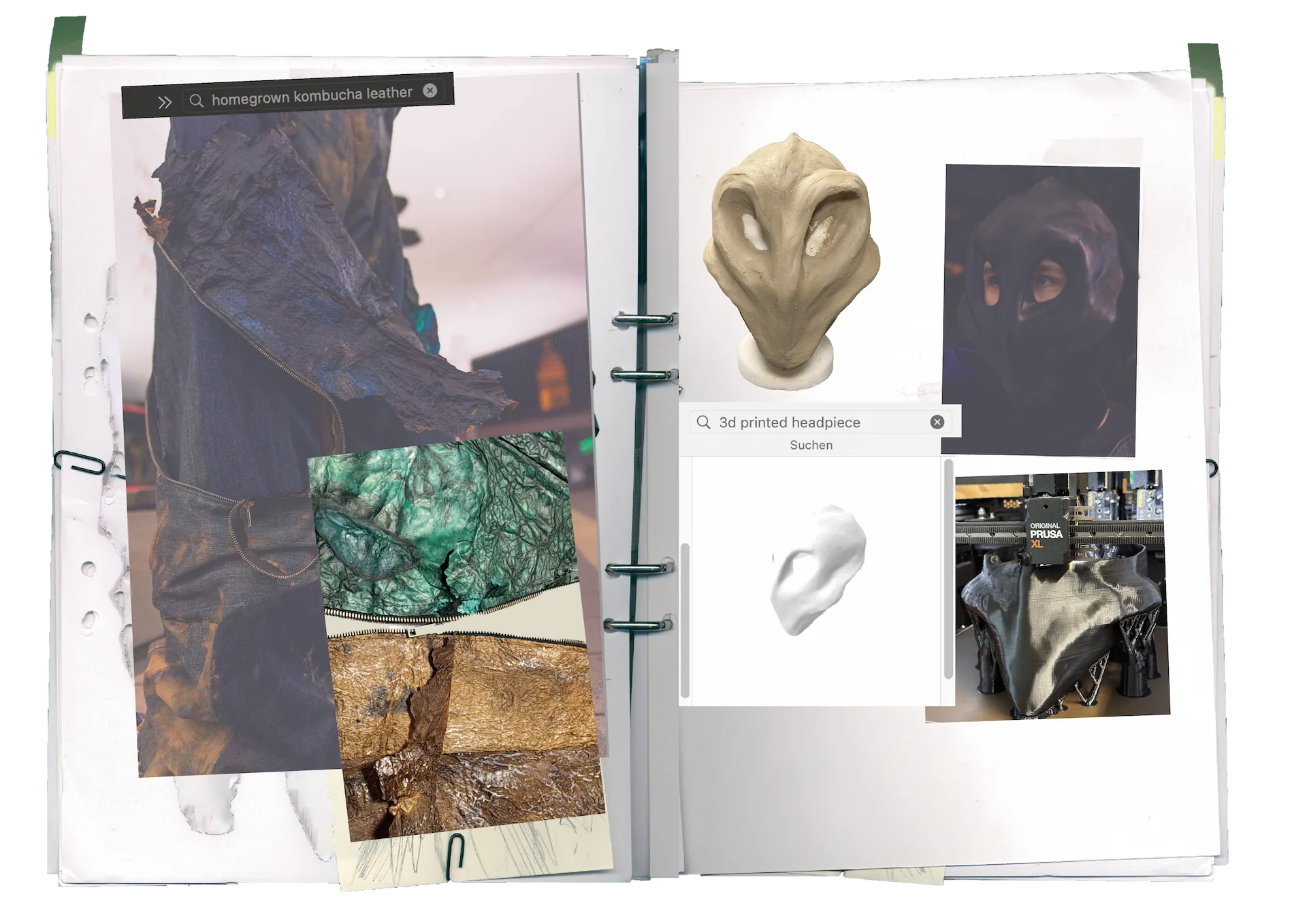
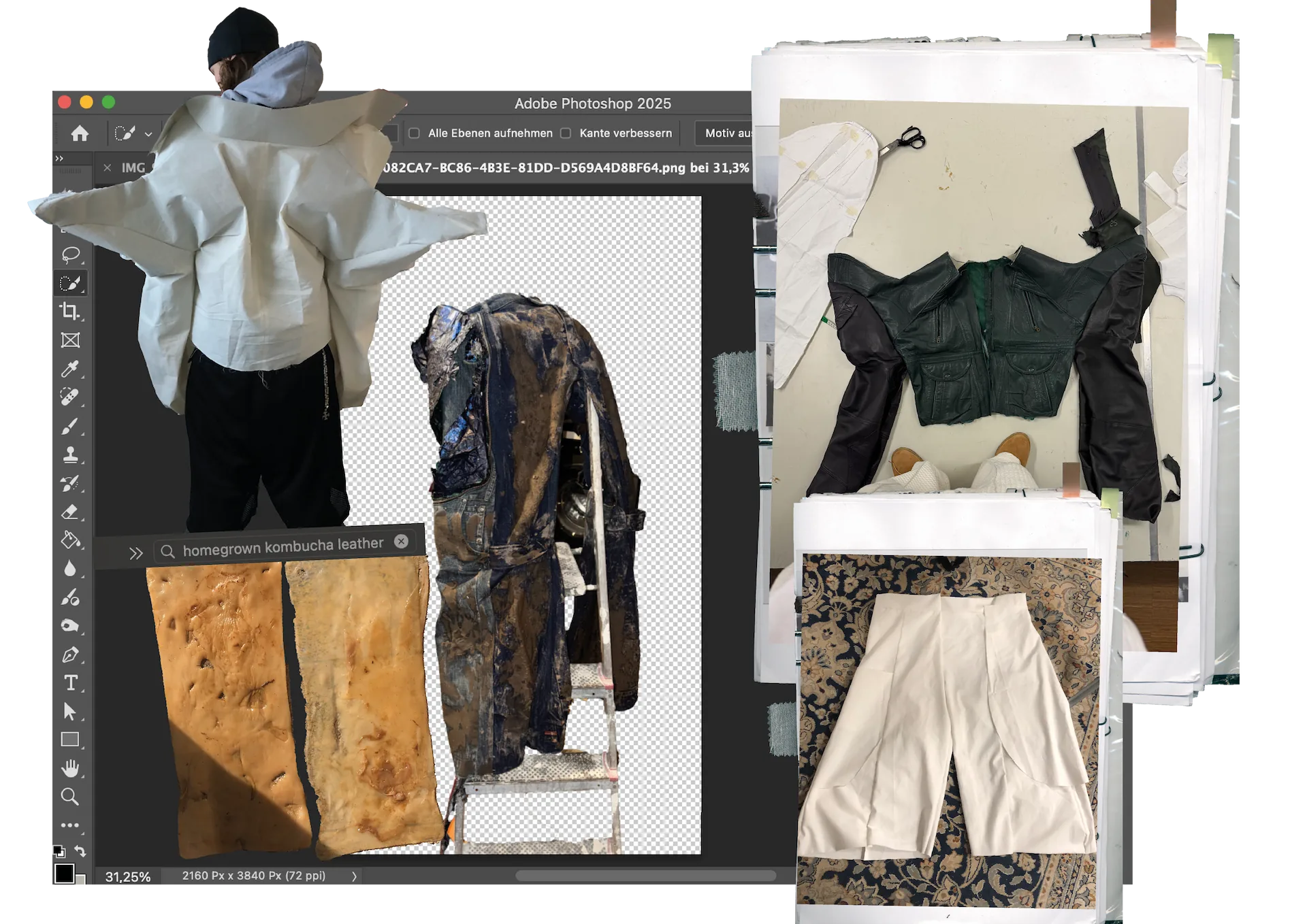
Look built from three leather jackets and denim, with homegrown kombucha leather and a 3D-printed headpiece (recycled PLA).
Alter Schlachthof, Pforzheim (2026) · RoWi Pforzheim (07/2025) · Pforzheim University (02/2025) · Staatsgalerie Stuttgart (2023) · Stuttgart City Hall, Long Night of Museums (2023) — incl. a presentation in the historic Paternoster elevator.
Experience
Tutored students in pattern construction and in realising their garments, from pattern to finished piece. Managed the department’s official Instagram account.
Designed and built the set for a panel talk presenting emerging fashion brands; speaker and guest care (3-day project).
Organised merchandise, advised customers and provided styling support.
No 01 · SS 26 — Hochschule Pforzheim
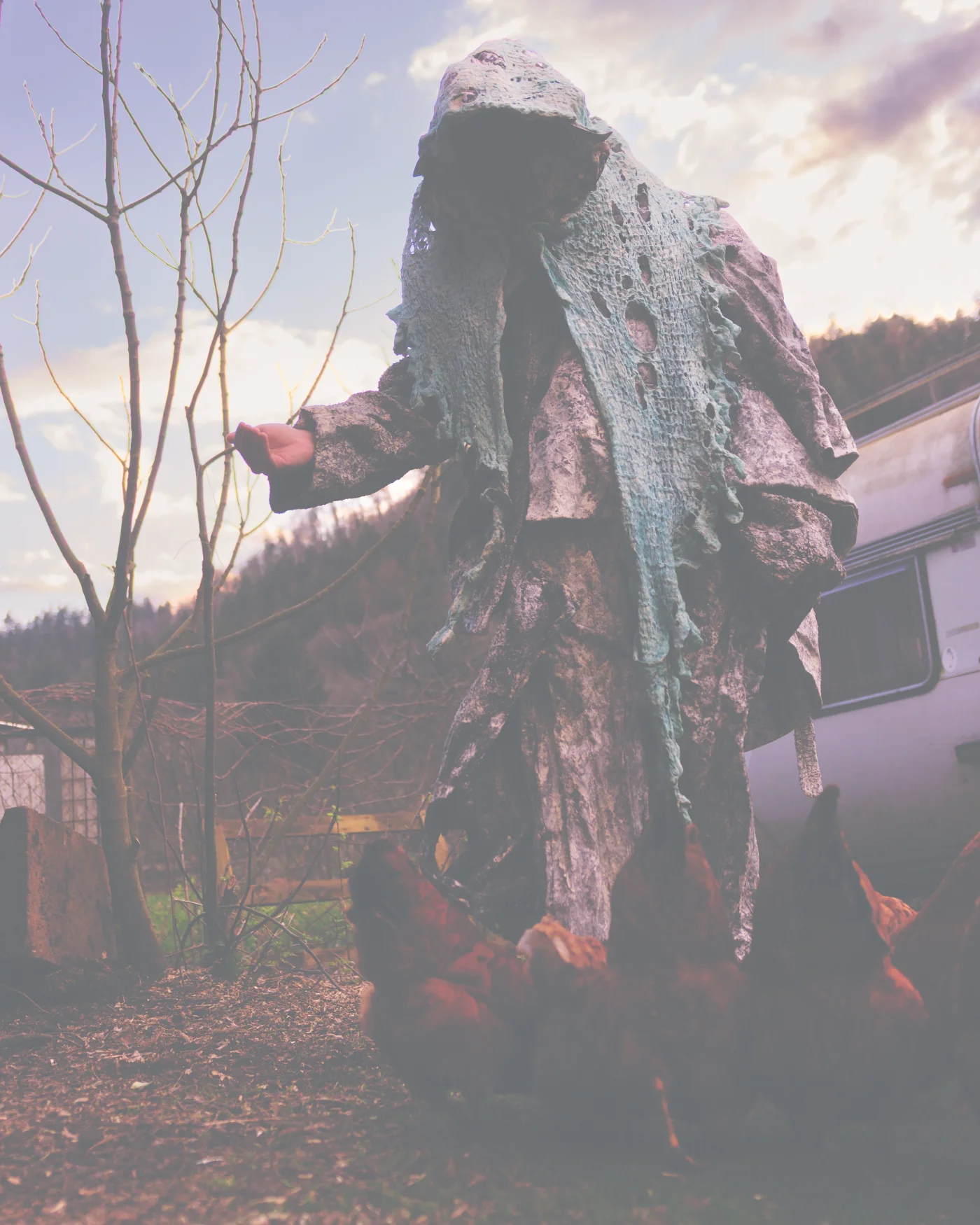
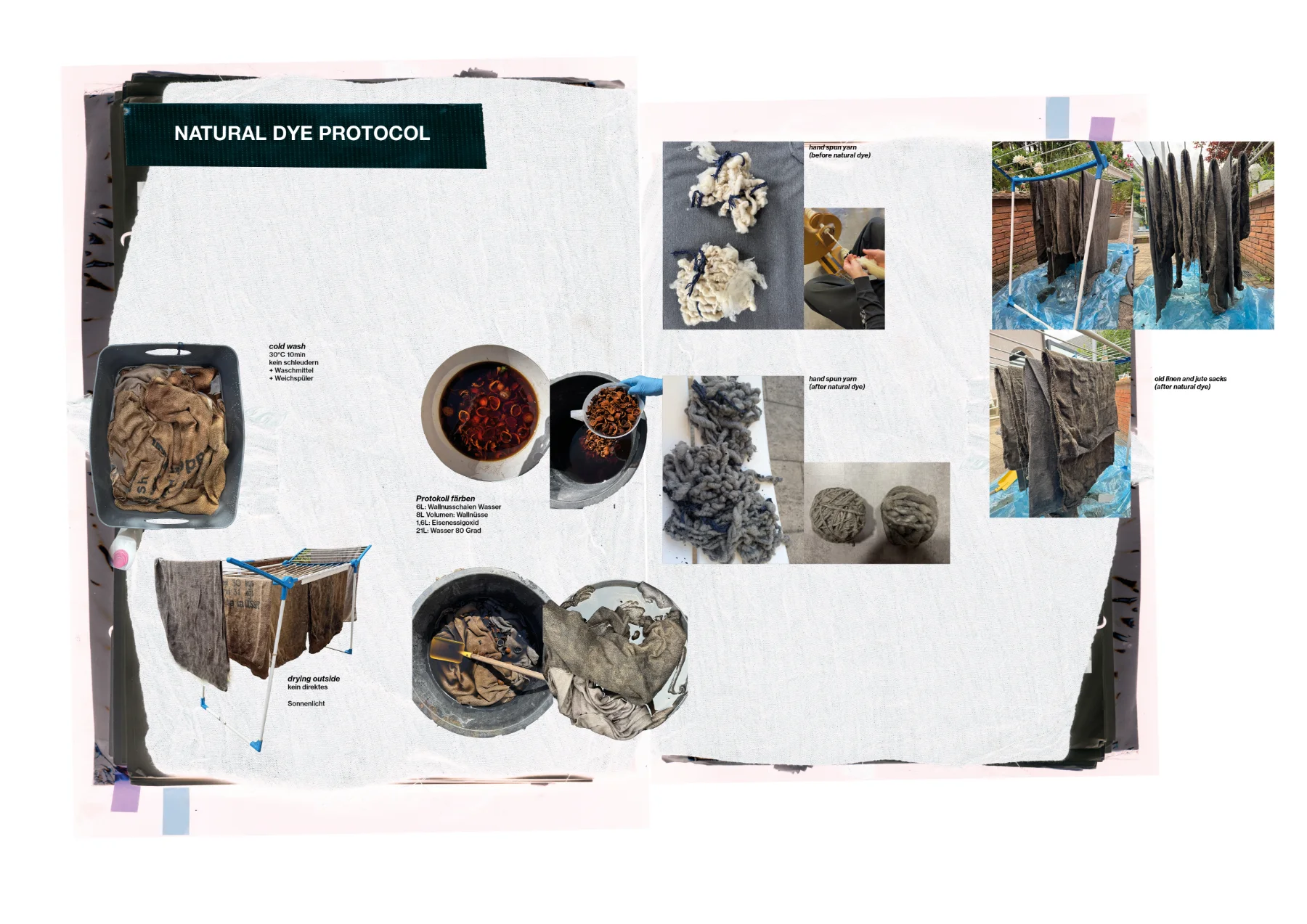
Searching, digging, slogging away
No 02 · 2025 — Hochschule Pforzheim, WS 25/26 · with Lorenz Keller
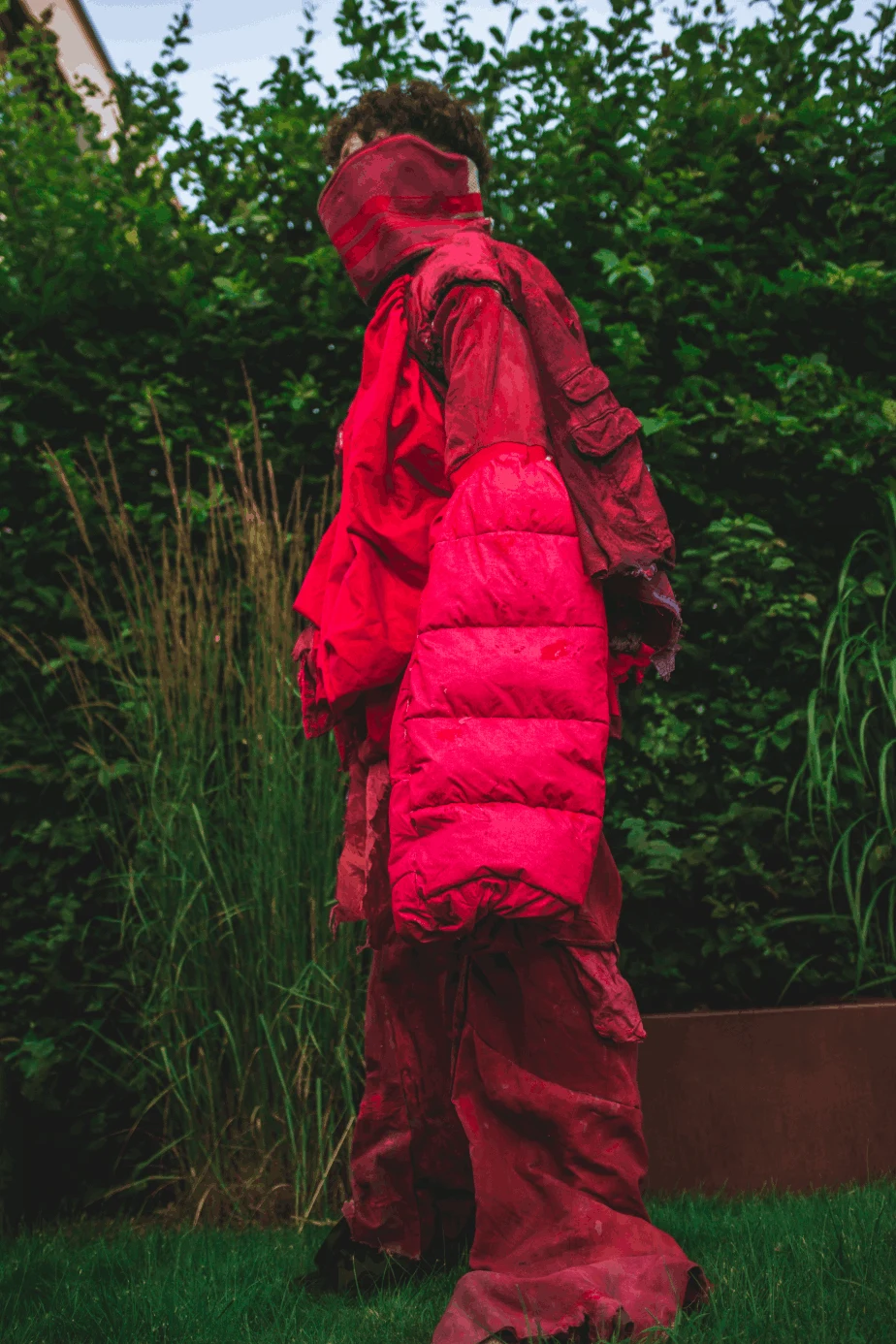
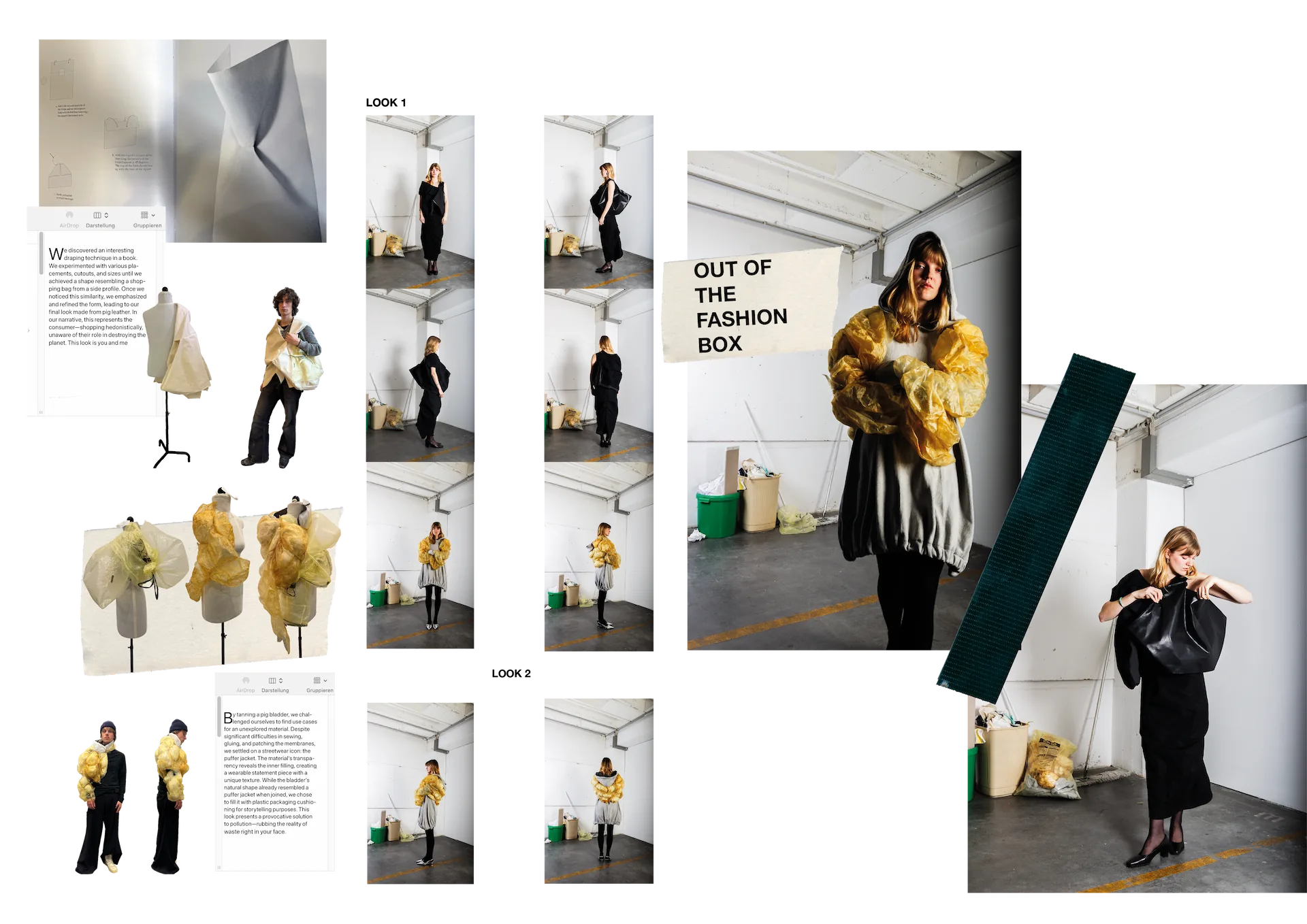
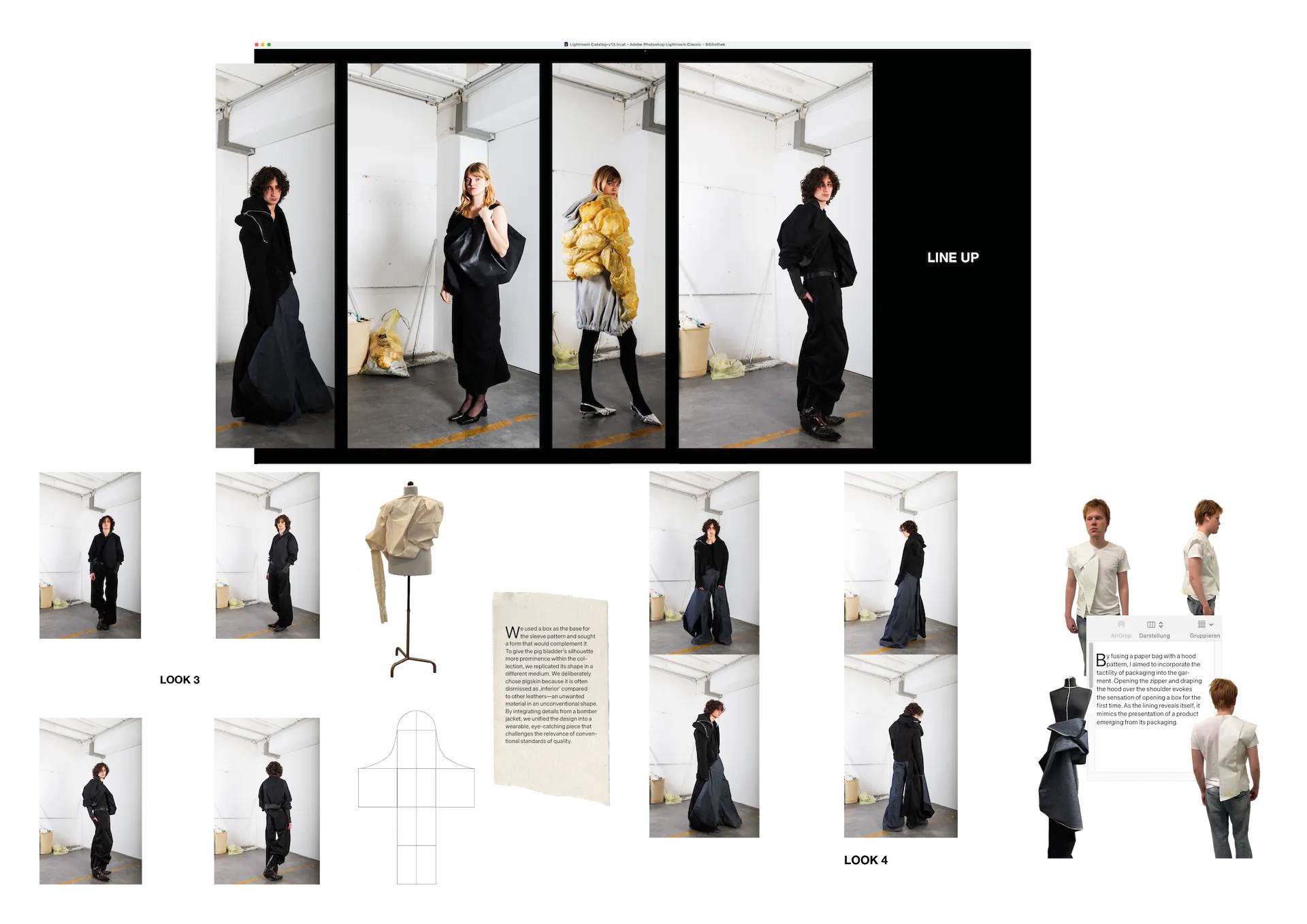
Out of the (Fashion)Box
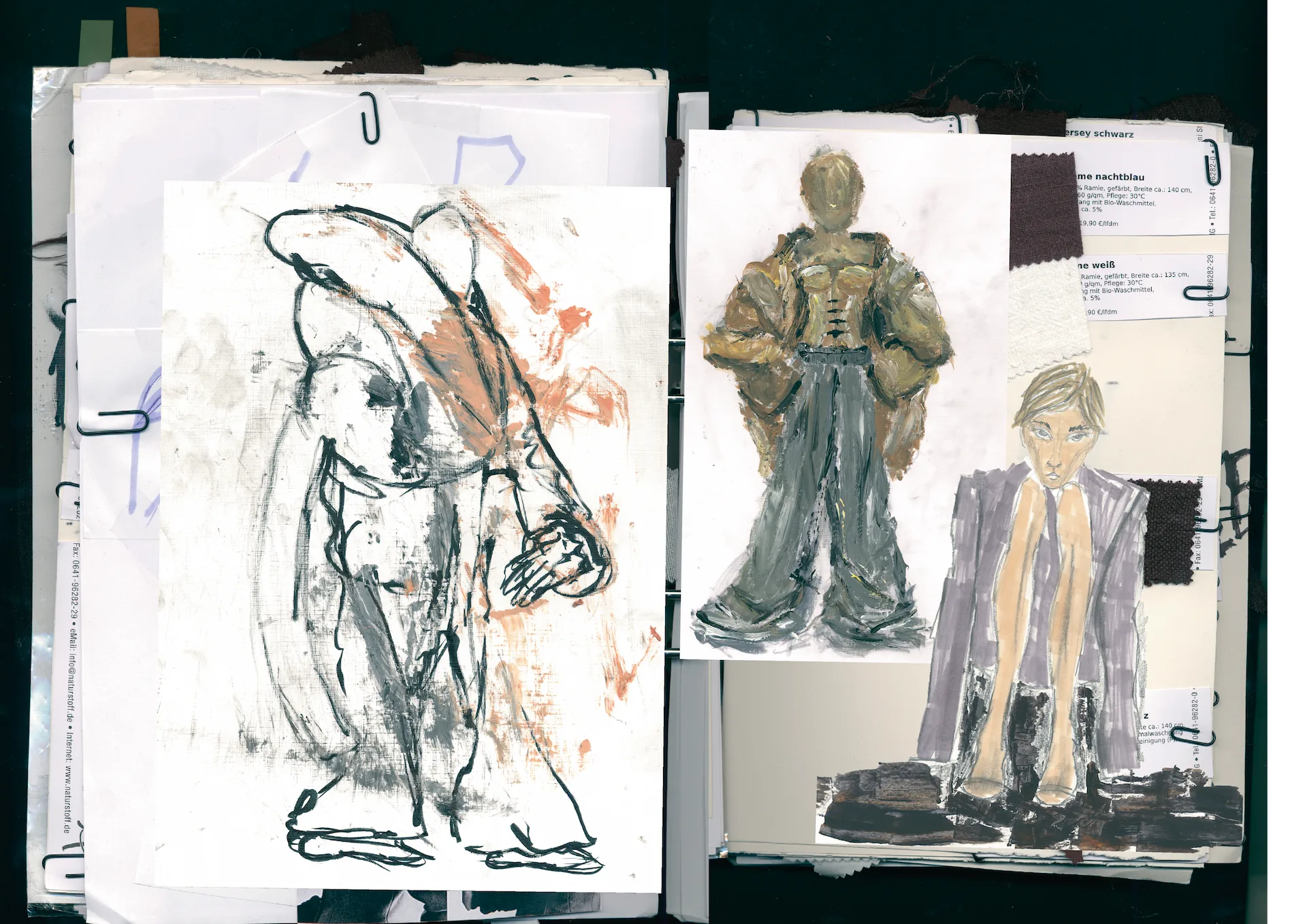
Fashion as packaging for the body: discarded industrial materials — pig bladder, plastic waste — recontextualized as luxury through craft. Drawing on Mary Douglas' "matter out of place" and Kristeva's abjection, the collection challenges the semiotics of value in throwaway culture.
No 03 · 2025 — Hochschule Pforzheim
Mottainai
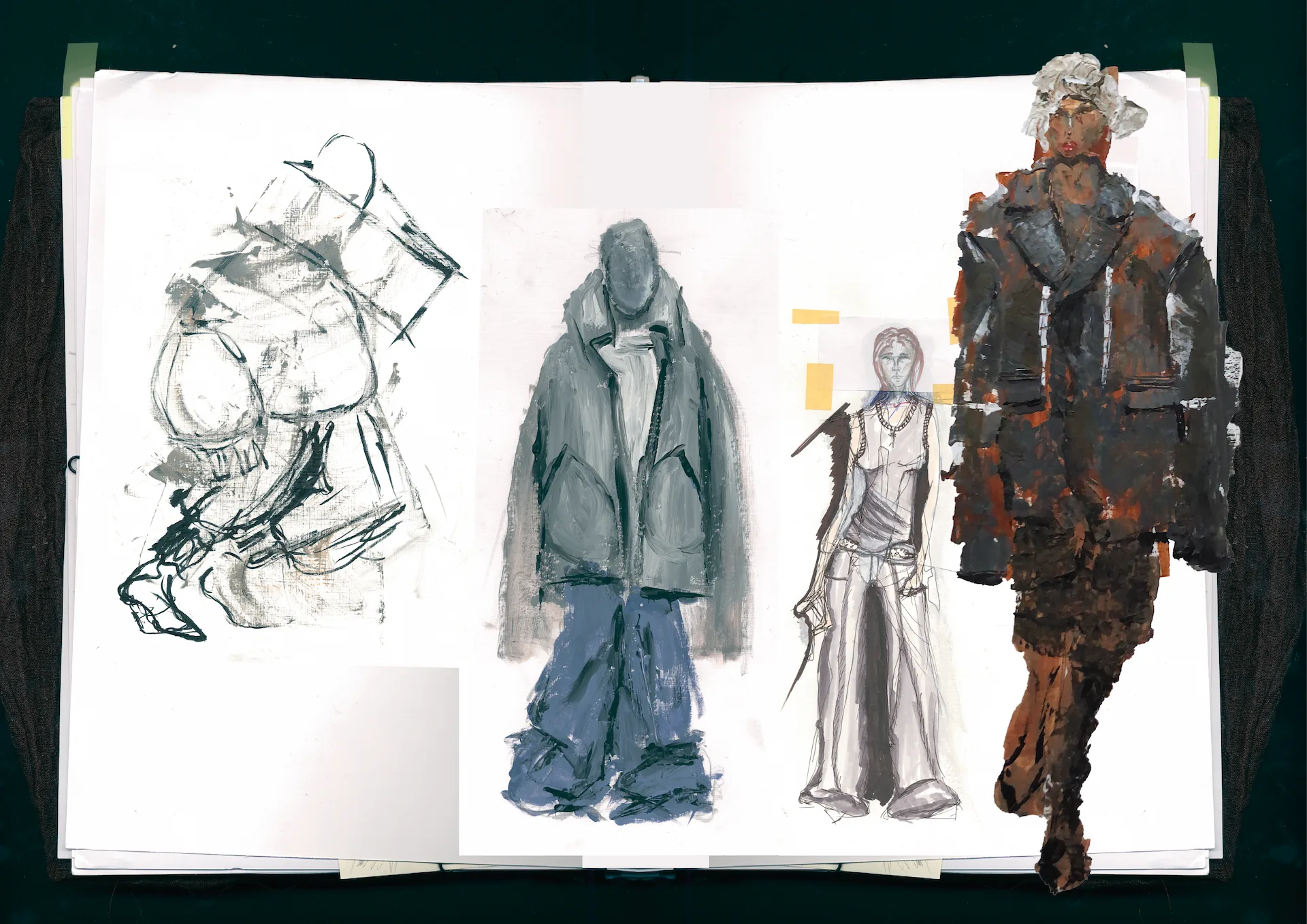
Mottainai (もったいない) — regret over waste. Discarded suits are deconstructed, reshaped and reconstructed into new forms, playing with sartorial codes and the tension between old and new — asking how fashion can reinvent itself sustainably.
No 04 · 2025 — Hochschule Pforzheim
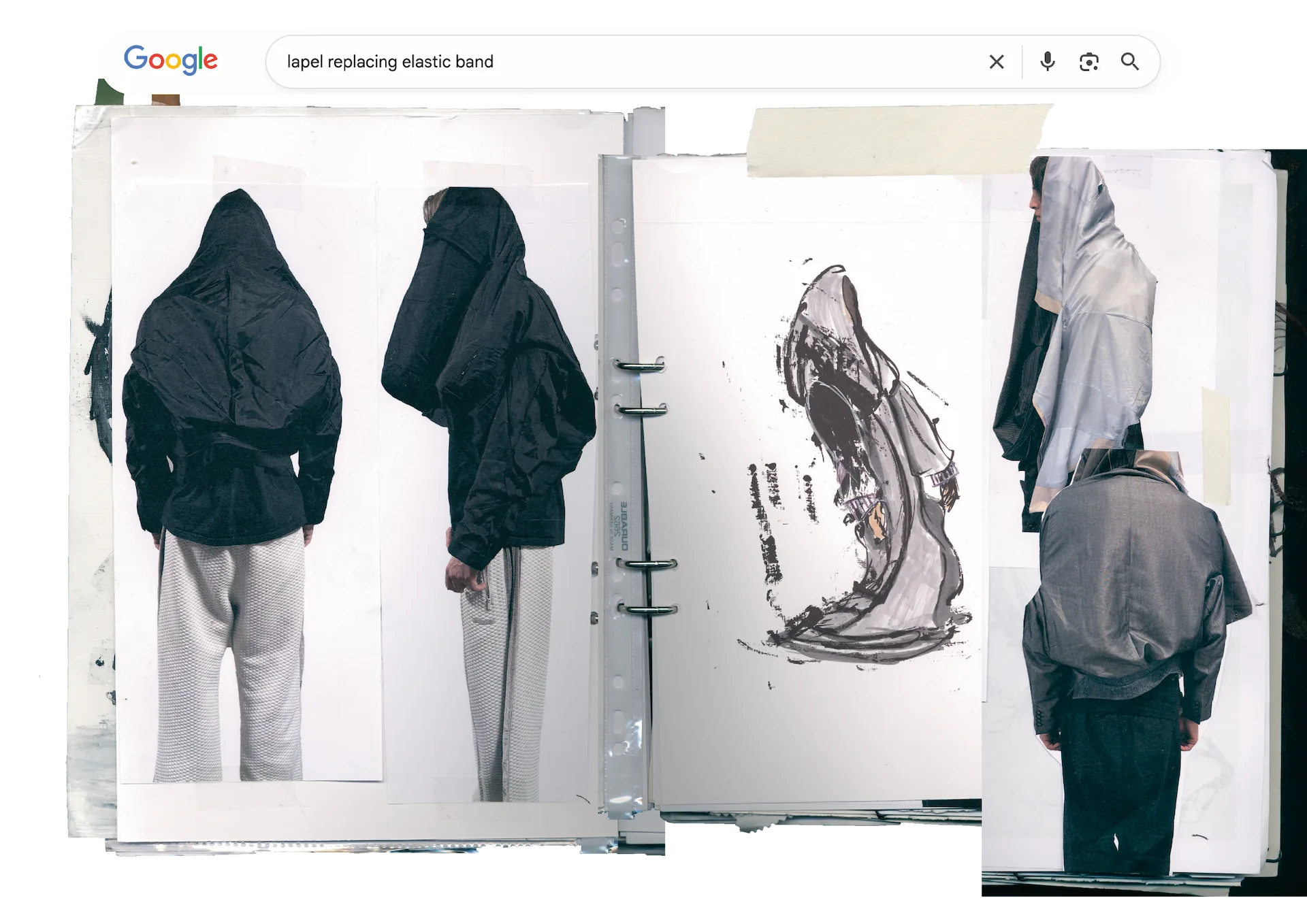
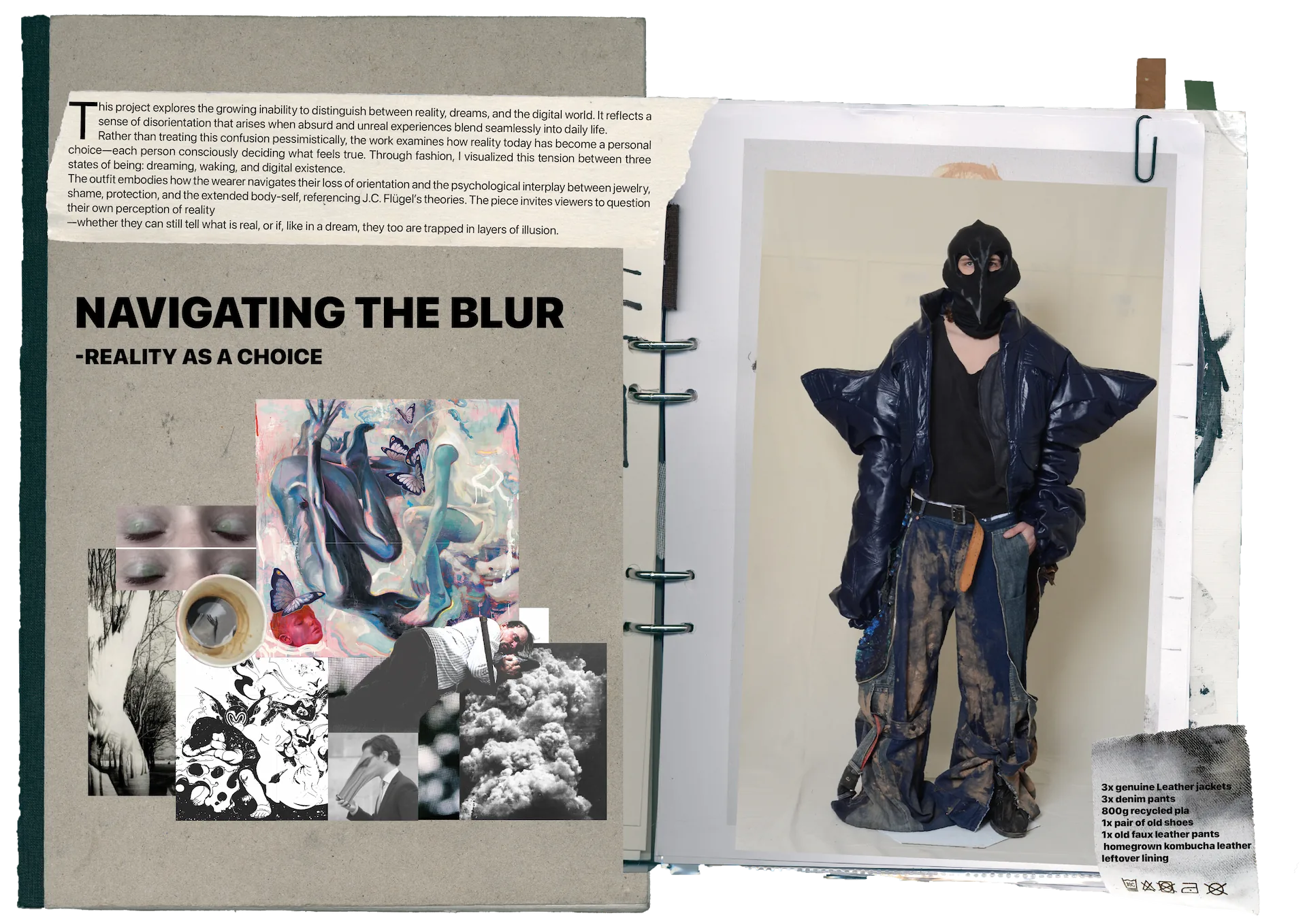
Navigating the Blur
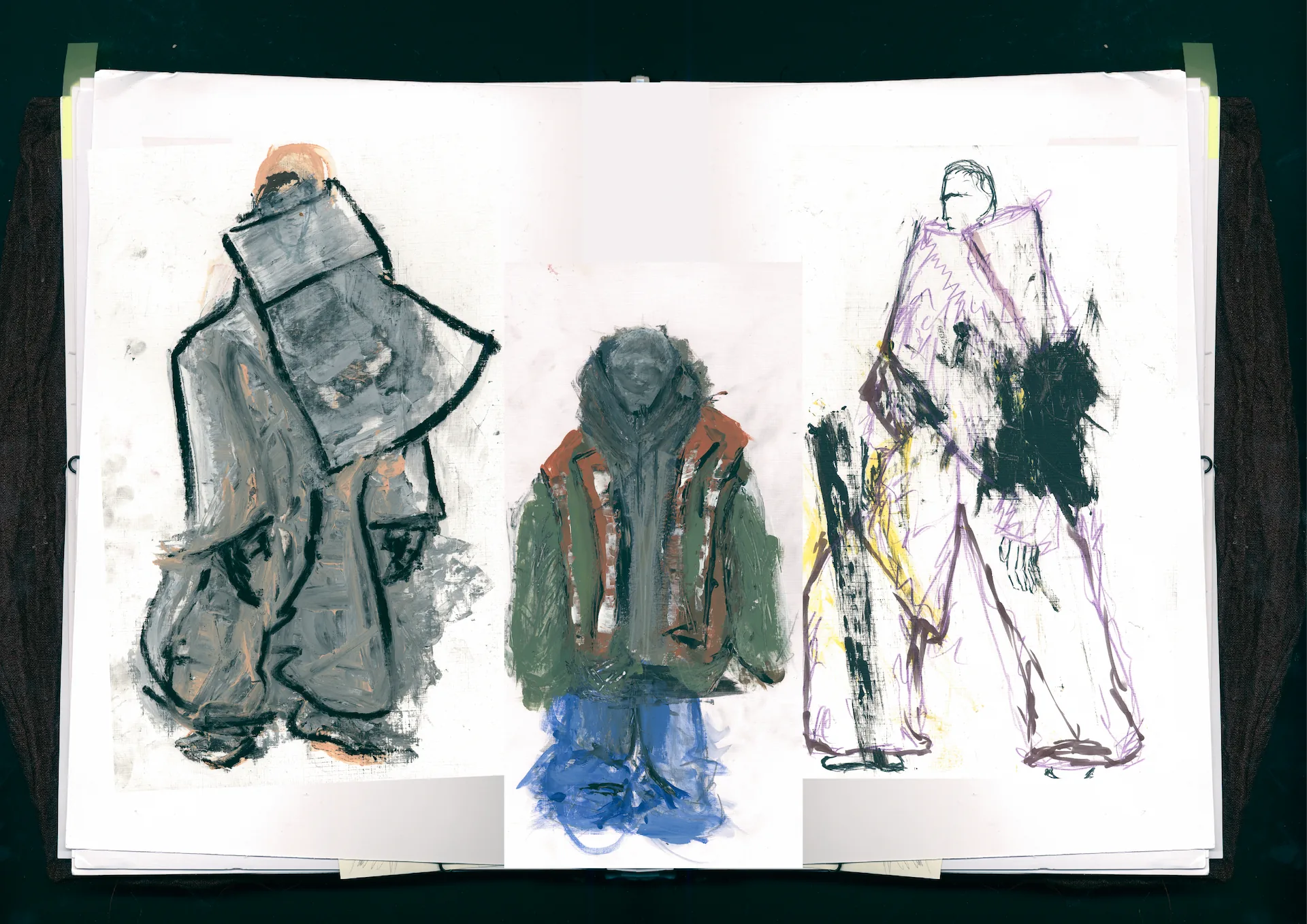
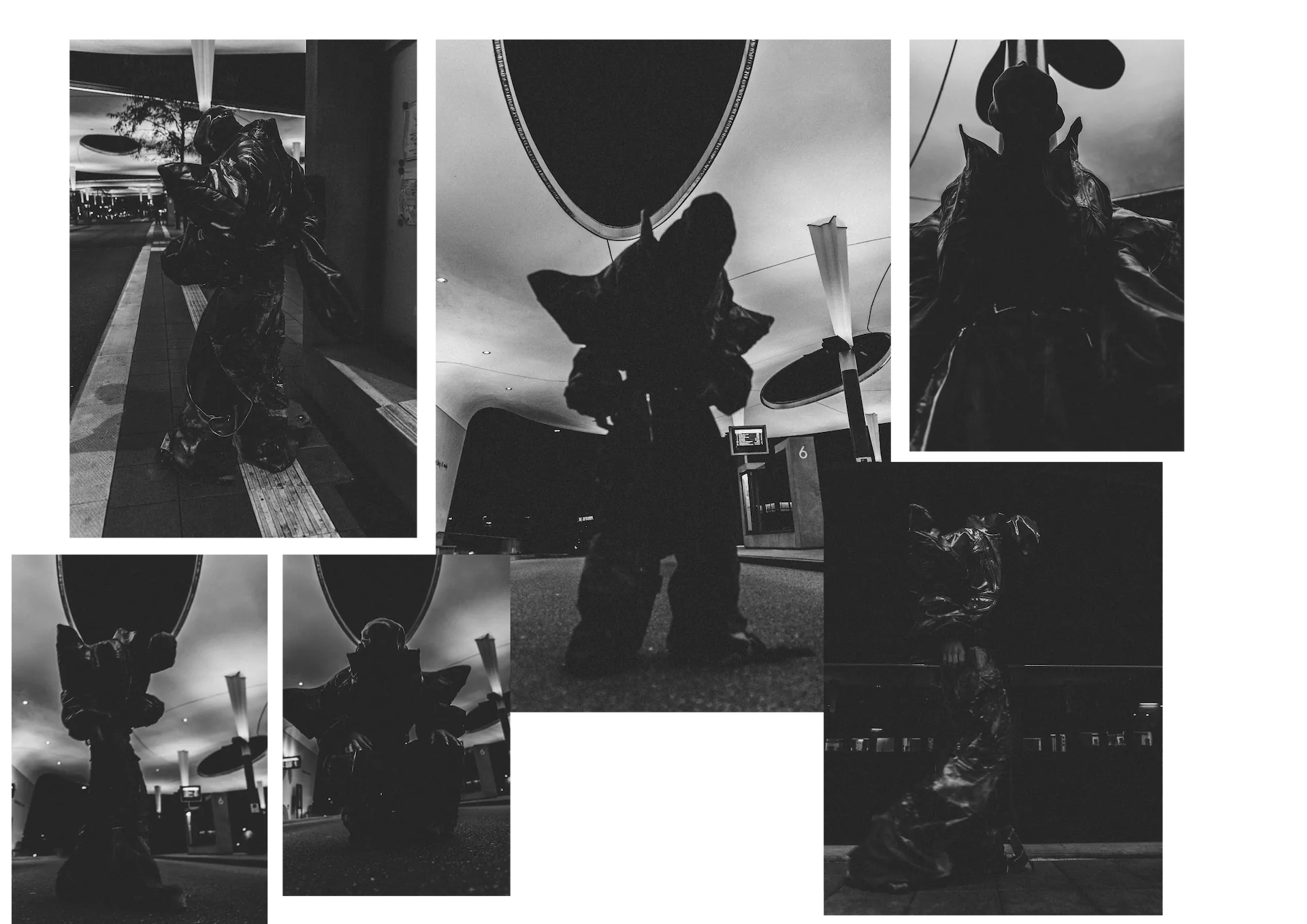
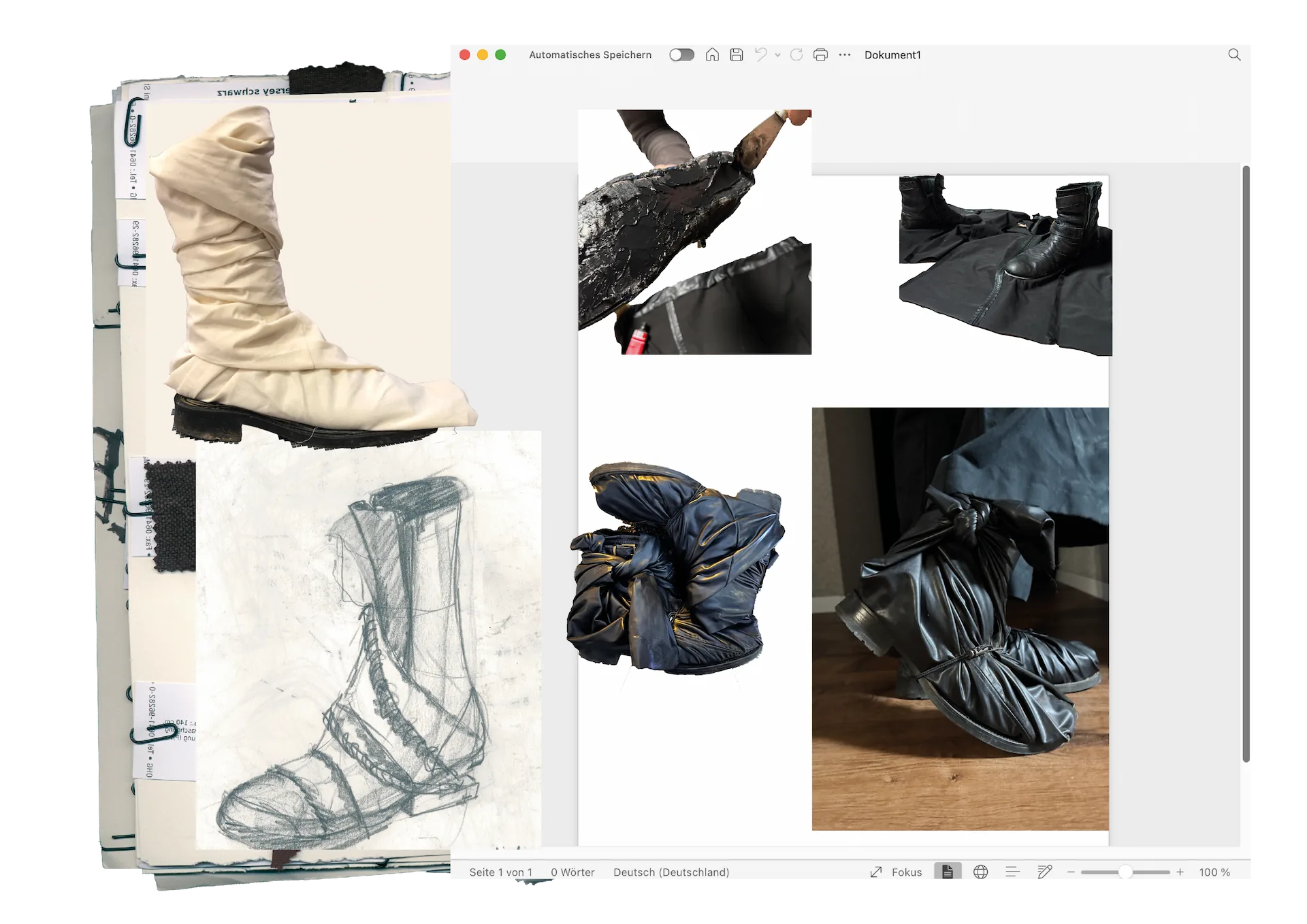
Reality as a choice: on the growing inability to distinguish reality, dreams and the digital. Referencing J.C. Flügel's theories on shame, protection and the extended body-self, the outfit embodies a wearer navigating disorientation — trapped, perhaps, in layers of illusion.
No 05 · 2024 — Modeschule Kehrer
Siberia Lake Baikal
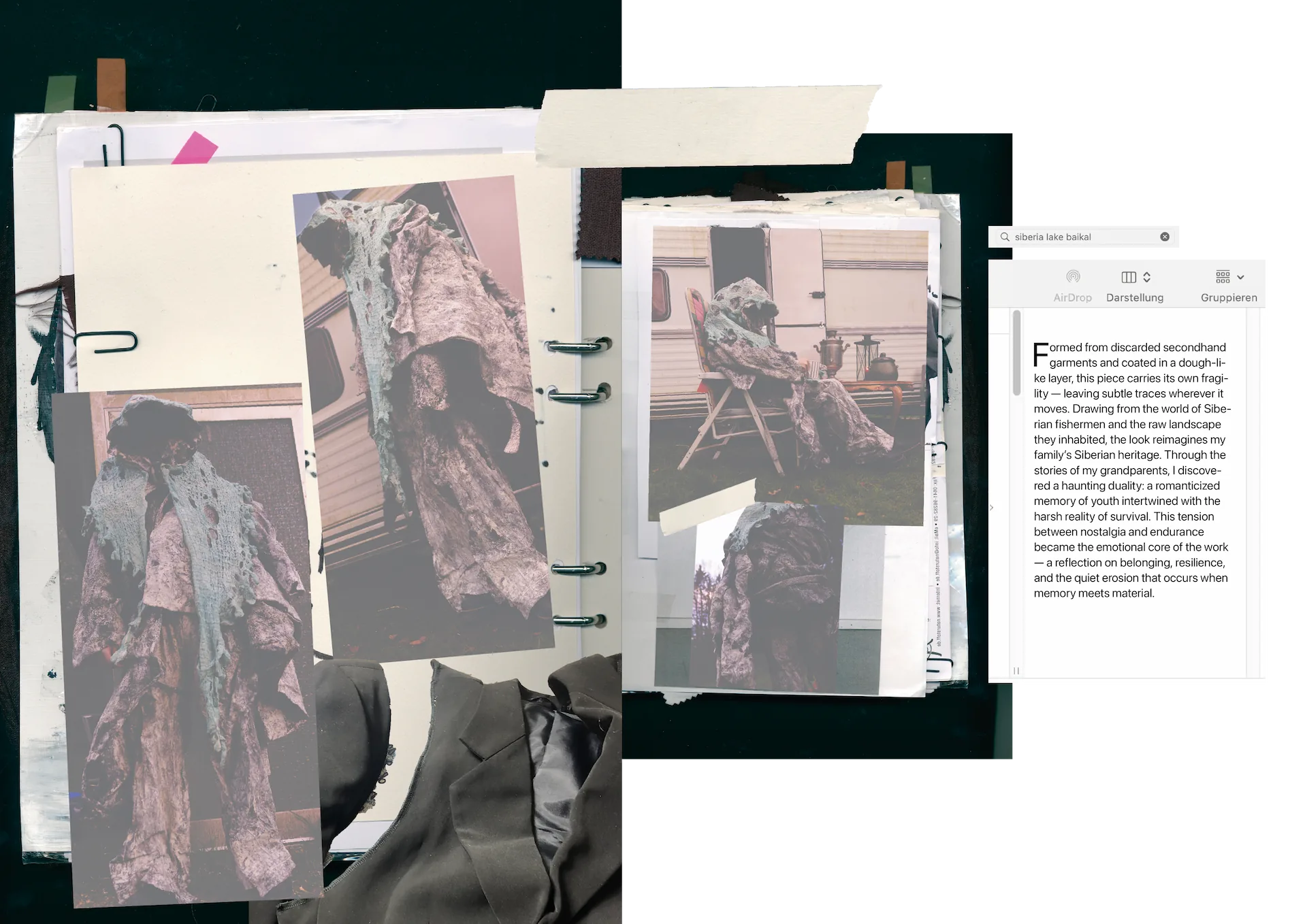
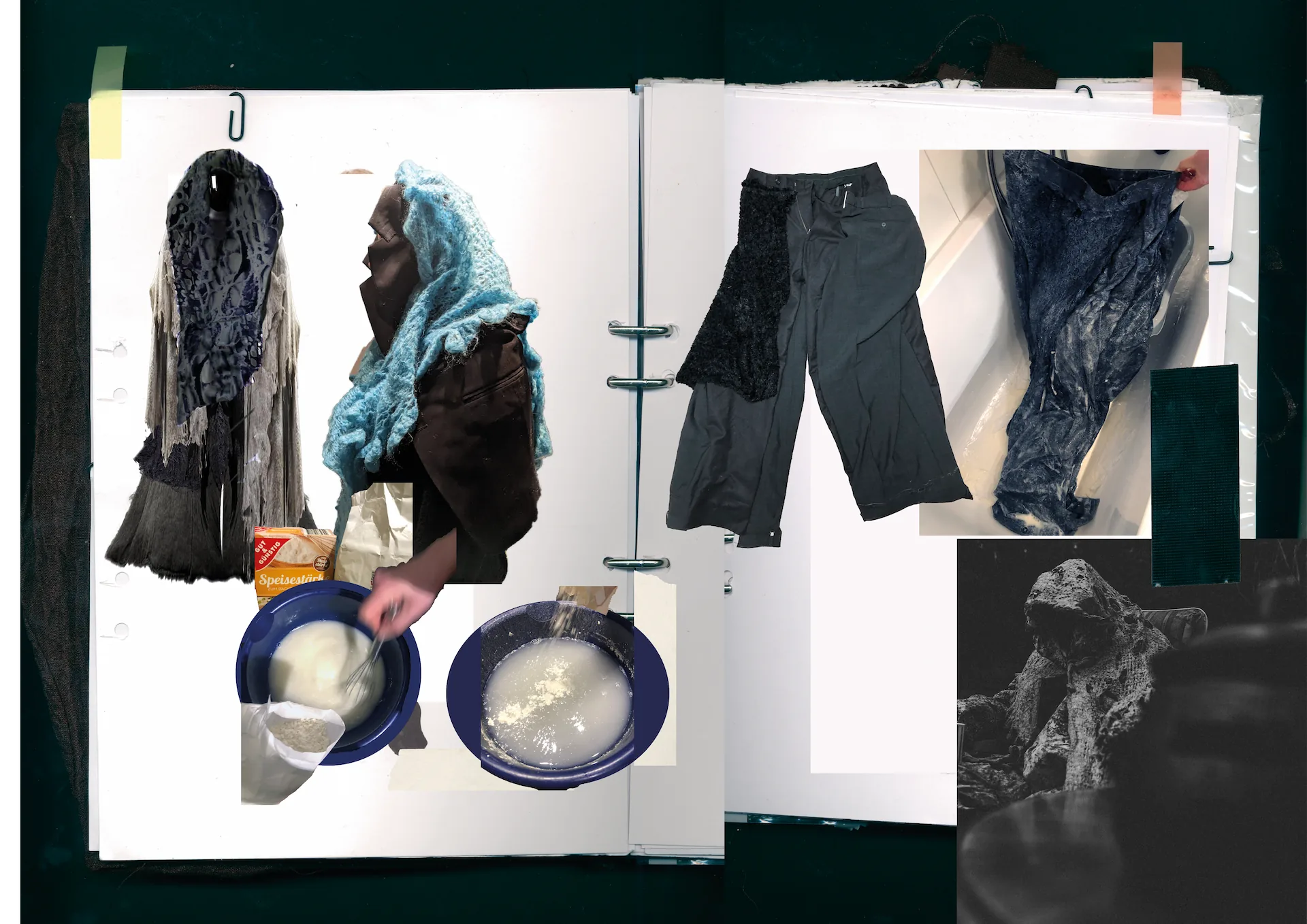
Formed from discarded secondhand garments and coated in a dough-like layer, the piece carries its own fragility — leaving traces wherever it moves. Drawing on the world of Siberian fishermen and my family's heritage: romanticized memory against the harsh reality of survival.
No 06 · 2024 — Modeschule Kehrer
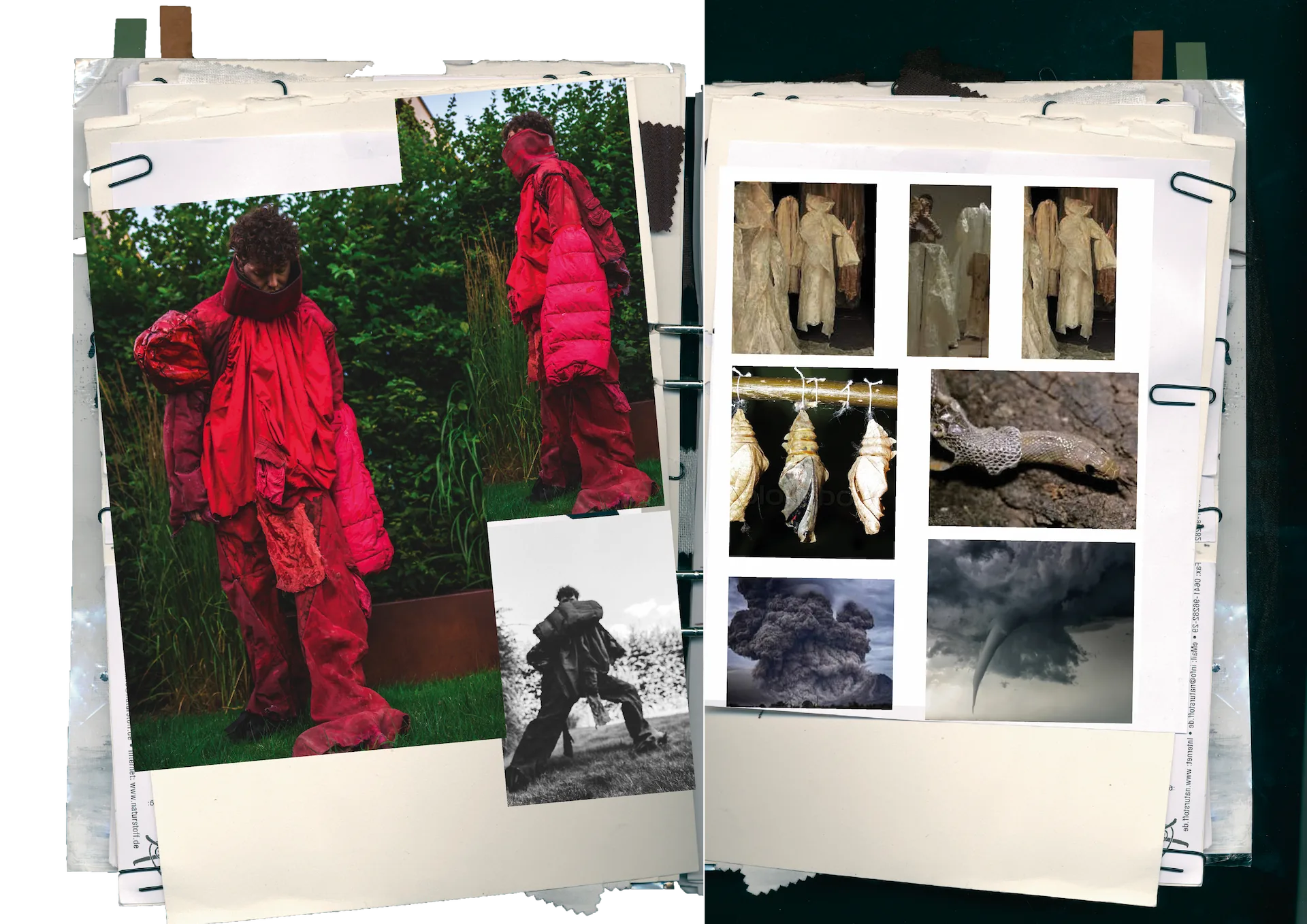
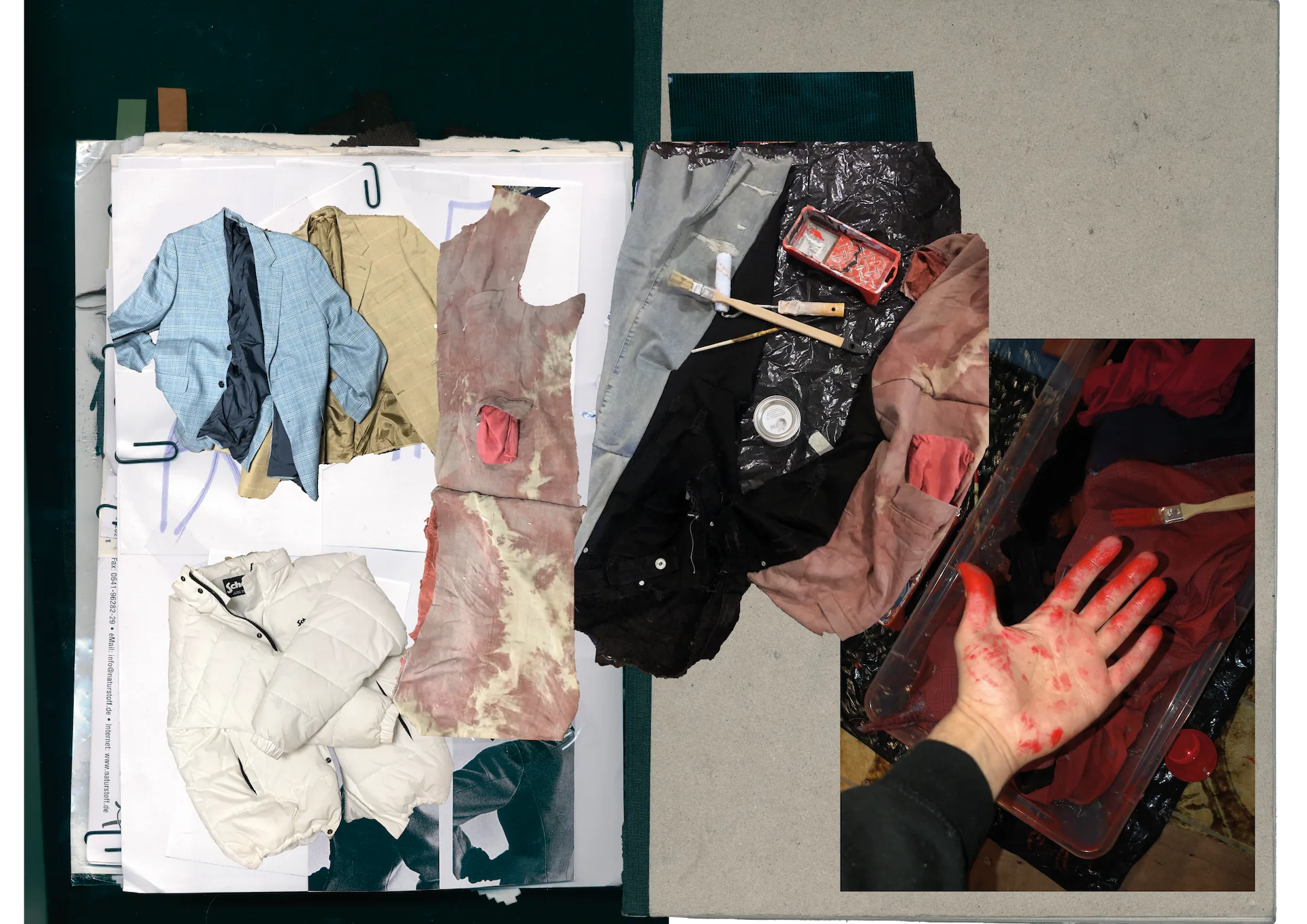
Molting Cocoon
A study of shedding and transformation — garments layered and dyed into a cocoon the wearer molts out of.
Index
All projects · 2025 — 26